
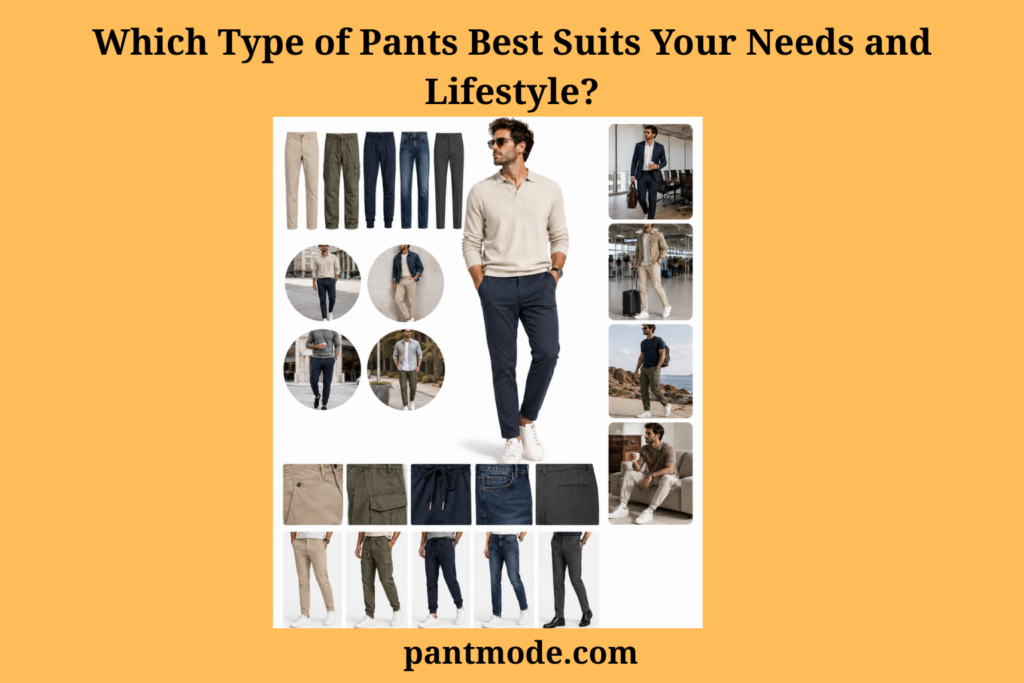
Which Type of Pants Best Suits Your Needs and Lifestyle?
The type of pants that best suits your needs and lifestyle is the category that matches your daily routine, required formality, movement level, climate, body comfort, and wardrobe.
Choosing pants should begin with the use case rather than a trend, sale price, colour, or brand. Place the category decision inside the wider buying factors framework, then verify the individual pair.
The main practical category lenses are casual, smart casual, formal, active or comfort, utility, seasonal, travel or performance, and trend-led pants. These categories can overlap. Stretch chinos, for example, can work as smart-casual trousers, travel pants, and a capsule basic.
Fit, fabric, occasion, and style are supporting filters. They confirm whether a chosen category works for the wearer, but they do not replace the primary category decision. No single category is best for everyone.
Quick Answer
The best type of pants depends on your lifestyle, profession, formality needs, movement level, climate, body comfort, and wardrobe. Jeans and relaxed cotton pants suit casual use, chinos support smart-casual settings, dress or wool trousers suit formal environments, joggers and performance pants support movement, and work pants or cargos suit utility-focused routines.
Definition
A type of pants is a functional trouser category defined by its primary use, level of formality, construction, fabric, fit, movement capacity, and wardrobe role. One pair may fit several categories, but its main repeated use should guide how it is classified and purchased.
Key Takeaway
Choose a type of pants by starting with your most common use case. Then confirm the required formality, movement, comfort, fit, fabric, climate, wardrobe compatibility, care needs, and expected wear frequency before buying.
Figure: start with routine and formality, then verify movement, climate, and the wardrobe gap.
Why Does Choosing the Right Type of Pants Matter for Daily Comfort?
Choosing the right type of pants matters because each pant category supports a different combination of comfort, movement, formality, climate, and repeated use.
Real activities should control the category. Sitting, walking, bending, commuting, standing, travelling, working, and attending events place different demands on a garment. A pair that looks attractive while standing may fail during a long journey or movement-heavy day.
Rigid jeans can suit short casual routines but restrict long travel. Heavy denim may offer durability and familiarity, yet the same structure can feel warm or restrictive during extended sitting.
Performance chinos can support travel and hybrid work. Stretch, recovery, and wrinkle resistance improve movement and maintenance. A technical finish, however, may appear too casual for highly formal settings.
Wool trousers can support formal environments. Their drape and refined surface may suit offices and events, but the care demands must fit the wearer’s routine.
A useful pair solves a repeated problem. Cost-per-wear improves when the category receives regular use. A useful secondary role adds versatility, but the primary role should still guide the purchase.
Essential Pants Category Table
| Pants Category | Primary Use | Functional Strength | Failure Signal |
|---|---|---|---|
| Jeans | Casual wear, weekends, relaxed outfits | Durability and familiarity | Too stiff, warm, or casual for the routine |
| Chinos | Smart casual, hybrid work, travel | Flexible formality | Weak fabric wrinkles, fades, or loses shape |
| Dress trousers | Formal offices, events, presentations | Polished structure | Too formal or restrictive for repeated casual use |
| Wool trousers | Professional and formal settings | Drape and refinement | Care demands exceed the wearer’s routine |
| Joggers | Lounging, errands, casual movement | Comfort and flexibility | Waistband or fabric appears too casual |
| Cargos | Utility, outdoor routines, streetwear | Pocket function | Pocket volume creates unwanted bulk |
| Work pants | Physical jobs and durability needs | Reinforced construction | Heavy structure is unnecessary for the routine |
| Performance pants | Travel, commuting, active offices | Stretch and wrinkle resistance | Technical finish limits formal use |
| Linen pants | Hot-weather and summer use | Breathability | Wrinkling conflicts with required polish |
| Wide-leg pants | Comfort and statement silhouettes | Movement and volume | Wardrobe lacks compatible tops or footwear |
| Tailored trousers | Events and professional outfits | Clean shape | Poor fit weakens the intended structure |
| Technical pants | Outdoor and movement-heavy routines | Lightweight function | Styling appears too sporty for the setting |
What Should You Know About Each Essential Type of Pants Before Shopping?
Each essential type of pants should be understood by the practical need it solves, the settings it supports, and the situations in which another category may work better.
Casual pants support relaxed routines. Jeans, casual cotton trousers, cargos, and relaxed twill pants prioritise familiarity, durability, or easy styling. They may not meet a strict professional dress code.
Smart-casual pants bridge relaxed and formal settings. Chinos, five-pocket twill pants, performance chinos, and clean straight trousers offer more polish than joggers or distressed denim without the structure of suit trousers.
Formal pants prioritise drape and professional structure. Dress trousers, wool trousers, suit trousers, tailored slacks, and pleated trousers suit offices, ceremonies, presentations, and events where appearance carries authority.
Active and comfort pants prioritise mobility. Joggers, stretch trousers, lounge pants, and technical pants support movement, recovery, and low-pressure comfort. Their visible casual features can limit formal use.
Utility pants solve storage and durability needs. Work pants, cargos, carpenter pants, and reinforced trousers add pockets or stronger stress points. Extra construction is unnecessary when the routine does not require it.
Seasonal pants match temperature and humidity. Linen and lightweight cotton support hot conditions, while corduroy, wool, and heavy twill support cooler weather. A seasonal pair should receive enough use to justify its wardrobe space.
Travel and performance pants reduce maintenance pressure. Stretch, wrinkle resistance, easy care, and secure pockets can support commuting and travel.
Trend-led pants create a deliberate silhouette. Wide-leg, barrel, flared, pleated, and cropped pants can add personal style after core needs are covered.
Figure: one pair may serve several categories, but its main repeated function should guide the purchase.
Pants Category Selection Table
| Shopping Need | Category to Consider First | Minimum Requirement | Consider Another Category When |
|---|---|---|---|
| Relaxed everyday wear | Casual | Comfortable construction and wardrobe compatibility | The setting requires professional polish |
| Flexible work-to-weekend use | Smart casual | Clean fabric, practical comfort, moderate formality | The workplace requires formal tailoring |
| Formal authority or ceremony | Formal | Structured cut, suitable fabric, clean drape | Movement or rugged durability is the priority |
| Maximum movement and comfort | Active or comfort | Secure waist, mobility, appropriate coverage | The setting rejects visibly casual clothing |
| Pockets and reinforcement | Utility | Functional storage and durable stress points | The wearer does not need added weight or bulk |
| Climate-specific comfort | Seasonal | Fabric suited to temperature and humidity | The category has little use beyond one season |
| Frequent travel | Travel or performance | Recovery, easy care, movement, secure storage | A highly traditional dress code applies |
| Deliberate statement silhouette | Trend-led | Existing outfit plan and suitable proportions | Core wardrobe gaps remain unfilled |
| Fewer but more useful pants | Capsule basic | Repeated use across several settings | The wardrobe already has enough neutral basics |
Category interpretation: a single pair may qualify as smart-casual, travel-friendly, seasonal, or capsule-friendly at the same time. The category that solves the main repeated need should guide the purchase.
Which Type of Pants Best Matches Your Profession and Daily Routine?
The type of pants that best matches your profession and daily routine is the category that satisfies both the dress code and the physical demands of your day.
Profession alone does not decide the category. Consider formality, sitting time, standing time, movement, weather exposure, pocket needs, commuting, travel, and maintenance. The correct pant occasion confirms whether the category is socially appropriate.
Traditional corporate settings usually require formal trousers. Wool trousers, tailored dress trousers, or clean suit trousers support a structured professional appearance.
Hybrid work often benefits from smart-casual flexibility. Chinos, performance chinos, and clean smart trousers can combine polish with movement and easier care.
Creative offices may allow more visual freedom. Relaxed tailoring, pleated trousers, dark denim, or wide-leg trousers can work when the dress code and outfit remain intentional.
Physical jobs require function before polish. Work pants, cargos, reinforced denim, and utility trousers support pockets, abrasion, bending, and stress at the knees and seams.
Long sitting requires rise and seat comfort. A comfortable rise, enough seat and thigh room, and fabric recovery prevent pressure and pulling.
Long standing requires waistband stability and free knees. Breathable fabric and unrestricted movement reduce fatigue caused by a poor category or cut.
Frequent travel rewards low-maintenance construction. Stretch, wrinkle resistance, secure pockets, and easy care may matter more than trend value.
One profession may need several categories. A teacher, for example, may need smart trousers for work, casual pants for weekends, and performance pants for travel.
Lifestyle-to-Pant Decision Matrix
| Lifestyle or Routine | Formality Need | Movement Need | Type of Pants to Consider First | Why It Works |
|---|---|---|---|---|
| Traditional office | High | Low to medium | Wool or dress trousers | Structured and professional |
| Hybrid worker | Medium | Medium | Performance chinos or smart trousers | Polished and comfortable |
| Frequent traveller | Medium | High | Stretch chinos or performance pants | Movement and low maintenance |
| Creative professional | Medium | Medium | Pleated trousers, relaxed chinos, or dark denim | Personal style with polish |
| Physical job | Low to medium | High | Work pants, cargos, or reinforced denim | Durable and functional |
| Student | Low to medium | Medium | Jeans, chinos, or joggers | Practical and adaptable |
| Parent or errands | Low to medium | High | Stretch cotton pants, joggers, or chinos | Easy movement and comfort |
| Outdoor routine | Low | High | Technical pants or cargos | Weather and pocket function |
| Formal events | High | Low | Tailored or suit trousers | Clean drape and structure |
| Minimal wardrobe | Medium | Medium | Dark denim, chinos, and charcoal trousers | Covers several settings |
Profession and Routine Matching Table
| Profession or Routine | Recommended Type of Pants | Avoid as the Default | Key Check |
|---|---|---|---|
| Corporate or legal role | Wool trousers or tailored slacks | Joggers and distressed denim | Drape, crease, and formality |
| Teacher or lecturer | Chinos or smart trousers | Restrictive cuts | Sitting and movement comfort |
| Designer or creative worker | Relaxed tailoring or dark denim | Stiff formal-only trousers | Personal style with polish |
| Retail or hospitality | Stretch chinos or durable trousers | Delicate fabric | Long-standing comfort |
| Construction or trade | Work pants or reinforced denim | Thin fashion fabric | Knee, pocket, and seam strength |
| Remote worker | Clean joggers, chinos, or lounge trousers | Visibly worn or shapeless pants | Comfort with presentable appearance |
| Frequent flyer | Performance trousers | Heavy wrinkle-prone fabric | Recovery and easy care |
| Student | Jeans, cargos, or chinos | Formal-only wardrobe | Durability and versatility |
| Gym-to-errands routine | Active joggers or technical pants | Formal slacks | Secure waist and movement |
| Event-heavy schedule | Charcoal or tailored trousers | Trend-only casual pants | Formal readiness |
Which Type of Pants Best Supports Different Body Proportions?
The type of pants that best supports different body proportions is the cut that provides enough room, keeps the waistband stable, and creates the leg line the wearer prefers.
Body-proportion guidance is optional. Comfort and personal preference come before visual correction. Any wearer may choose a silhouette when it feels comfortable and supports the intended outfit.
Muscular thighs may benefit from more upper-leg room. Athletic-tapered, straight, and relaxed-straight cuts can reduce thigh restriction and pocket flare.
Slender frames may prefer controlled volume. Slim-straight, tailored-straight, and softly tapered cuts can maintain a cleaner line, but wider silhouettes remain valid when intentionally styled.
Broader midsections may benefit from a stable waistband. A secure mid-rise or higher-rise relaxed-straight cut may reduce digging, sliding, or waist collapse.
Shorter heights can wear straight, cropped, or wide-leg pants. Rise, length, fabric, footwear, and hem control matter more than a restrictive body rule.
Taller heights can use longer and wider silhouettes. Straight, relaxed, pleated, and wide-leg cuts may use vertical length effectively when the inseam is intentional.
Fuller hips or seats may benefit from shaped construction. Curvy fits, shaped waistbands, higher rises, and relaxed-straight cuts may reduce waist gaps and seat pulling.
Straight-leg pants often provide balanced versatility. They can work across many wardrobes, but they are not universally superior. Try several cuts and use actual pants fit signals instead of trusting the label alone.
Body Proportion Cut Match Table
| Proportion or Comfort Need | Cut Worth Trying | Common Fit Failure | Possible Benefit |
|---|---|---|---|
| Muscular thighs | Athletic taper, straight, relaxed-straight | Tight thigh and pocket flare | Adds upper-leg room |
| Slender frame | Slim-straight, tailored-straight | Excess fabric overwhelms the preferred line | Maintains a cleaner silhouette |
| Broader midsection | Mid-rise or higher-rise relaxed-straight | Low-rise digging or sliding | Supports waistband stability |
| Shorter height | Straight, slim-straight, controlled crop | Heavy stacking | Creates a cleaner lower line |
| Taller height | Straight, relaxed, pleated, wide-leg | Unintentionally short inseam | Uses available vertical length |
| Fuller hips or seat | Curvy fit, shaped waistband, relaxed-straight | Waist gap and seat pulling | Improves waist-to-seat balance |
| Long torso or shorter legs | Higher rise and controlled break | Low rise visually lowers the waist | May increase visible leg line |
| Long legs | Balanced rise or intentional crop | Accidental ankle exposure | Keeps length deliberate |
| Comfort-first wearer | Relaxed-straight, stretch chino, jogger | Rigid slim restriction | Supports movement |
| Formal polish | Tailored straight or pleated trouser | Baggy casual structure | Preserves clean drape |
Inclusive boundary: these cuts may provide comfort or create a preferred line. They do not prohibit any wearer from choosing another silhouette.
How Can You Fix Mistakes When Choosing a Type of Pants?
You can fix mistakes when choosing a type of pants by identifying whether the problem comes from the category, cut, rise, fabric, length, climate, or intended use.
Waist gaps and pocket flare usually signal shape mismatch. A shaped waistband, different rise, or roomier seat may produce a cleaner result.
Tight thighs and crotch pulling reduce movement. Try an athletic, straight, or relaxed fit, or select a different trouser block with more rise and seat room.
Knee bagging reveals weak recovery. Stretch improves movement only when the fabric returns to shape. Evaluate the blend, weight, and recovery instead of assuming more stretch is always better.
Length must be tested with the intended shoes. Hem dragging, heavy stacking, or accidental shortness can weaken the category’s visual purpose.
Dress-code mismatch can come from the wrong category. Joggers may feel comfortable but look too casual for work, while structured formal trousers may receive little use in a relaxed routine.
Climate mismatch reduces comfort. Dense twill, corduroy, or heavy denim can feel too warm, while very light fabric may not suit cold weather or formal structure. Use pants fabric as a supporting filter.
Use a three-outfit test. A versatile pair should work with at least three existing tops or complete outfits and, where practical, two footwear options. A special-event or deliberate statement pair may remain valid with fewer combinations.
Check the product evidence before buying. The FTC textile guidance supports reviewing fibre-content and garment-label information. This can reveal care demands and material details that affect the category’s usefulness.
Online buyers should verify the complete offer. The FTC shopping guidance recommends reading the full description, checking sellers and products, reviewing total costs and return policies, and keeping purchase records.
Common Pants Buying Mistake/Fix Table
| Problem | Likely Cause | Better Fix | Result |
|---|---|---|---|
| Waist gaps | Waist and hip proportions differ | Try a shaped waist, different rise, or tailoring-friendly pair | Cleaner waistband |
| Pocket flare | Seat or hips are restricted | Choose a roomier seat or different cut | Smoother front |
| Tight thighs | Cut is too slim | Try athletic, straight, or relaxed fit | Better movement |
| Knee bagging | Weak fabric recovery | Check blend, weight, and recovery | Longer-lasting shape |
| Crotch pulling | Rise or seat shape is wrong | Try a different rise or trouser block | Improved sitting comfort |
| Hem dragging | Inseam is too long | Choose a shorter length or tailor the hem | Cleaner break |
| Pants appear too short | Inseam or intended break is wrong | Try more length or different footwear | Deliberate proportion |
| Fabric shrinks | Fibre and care information were ignored | Check label and washing instructions | Fewer surprises |
| Too casual for work | Fabric, waistband, pockets, or closure are too relaxed | Choose chinos or tailored trousers | Better dress-code match |
| Too formal for daily use | Fabric and construction are too structured | Choose chinos or dark denim | More repeat wear |
| Too warm for climate | Fabric is too dense or poorly ventilated | Choose lighter fabric and construction | Better climate comfort |
| Trend silhouette feels awkward | Wardrobe does not support it | Test with existing tops and footwear | Better coordination |
| Category duplicates an existing pair | The new pants solve no new task | Buy a gap-filling or backup category instead | Better wardrobe efficiency |
| Low price hides weak value | Fit, fabric, or construction fails | Judge the complete pair rather than the discount | Better long-term use |
Fabric Stretch and Recovery Guide
| Fabric or Stretch Detail | What It Usually Means | Suitable Use | Watch-Out |
|---|---|---|---|
| 100% cotton | Natural feel with limited stretch | Denim, chinos, casual pants | Can feel rigid |
| Cotton with slight stretch | More movement and comfort | Everyday chinos and fitted pants | Check knee recovery |
| High-stretch blend | High flexibility | Travel, active, comfort pants | May lose structure |
| Polyester blend | Wrinkle resistance | Travel and performance pants | May feel less breathable |
| Wool with stretch | Refined appearance with movement | Office and formal trousers | Requires careful maintenance |
| Linen blend | Breathability with softer structure | Warm-weather pants | Still wrinkles |
| Nylon technical fabric | Lightweight durability | Outdoor and travel pants | Can look sporty |
| Heavy twill | Structure and durability | Work pants, chinos, cargos | Can feel stiff or warm |
| Corduroy | Warmth and visible texture | Cool-weather trousers | Can add visual volume |
| Recovery test | Fabric returns after stretching | Any stretch trousers | Avoid rapid knee bagging |
How Can You Build a Versatile Wardrobe With the Right Type of Pants?
You can build a versatile wardrobe with the right type of pants by filling repeated lifestyle roles before buying niche, duplicate, or trend-led categories.
Start with the three settings you use most. These may include everyday casual wear, work, smart-casual situations, formal events, travel, movement, hot weather, or cold weather.
Dark denim or clean jeans can cover everyday casual use. Choose a wash and cut that work with the tops, footwear, and outerwear already owned.
Chinos can cover smart-casual flexibility. Navy, olive, khaki, or charcoal may work across hybrid work, dinners, and travel when the fabric and cut are suitable.
Tailored trousers cover formal needs. Charcoal, navy, grey, or black trousers can prepare the wardrobe for professional settings and events.
Joggers or performance trousers cover comfort and movement. Quality matters because weak waistbands and poor recovery can reduce repeat use.
Utility categories should solve a real task. Cargos or work pants add value when pockets, reinforcement, or rugged use are genuinely needed.
Seasonal categories should match the climate. Linen, lightweight cotton, corduroy, wool, and technical fabrics should fill a real temperature or routine need.
Add one statement category after core coverage. Wide-leg, pleated, patterned, flared, or coloured pants can express personal pant style when the wardrobe has a clear outfit plan.
Control duplication. A second pair in the most-used category may be more useful than a new niche silhouette. Mark every pair by its primary wardrobe task even when it covers several roles.
Figure: cover repeated lifestyle roles before buying duplicate or niche categories.
Core Trouser Wardrobe Checklist
| Wardrobe Role | Type of Pants to Consider | Useful Colour Direction | Main Purpose |
|---|---|---|---|
| Everyday casual | Dark denim or straight jeans | Dark blue, black, clean wash | Weekends and casual outfits |
| Smart casual | Chinos or five-pocket twill | Navy, olive, khaki, charcoal | Hybrid work, travel, dinners |
| Formal | Tailored or wool trousers | Charcoal, navy, grey, black | Events and professional settings |
| Comfort | Joggers or stretch trousers | Black, grey, navy | Lounge, errands, movement |
| Utility | Cargos or work pants | Olive, brown, black, khaki | Pockets and practical use |
| Hot weather | Linen or lightweight cotton pants | Stone, cream, tan, light grey | Warm climates |
| Cold weather | Corduroy or wool trousers | Brown, charcoal, navy, deep green | Cool climates |
| Travel | Performance pants | Navy, charcoal, black | Movement and low maintenance |
| Statement | Wide-leg, pleated, patterned, flared, or coloured pants | Based on the wardrobe | Personal style |
| Backup basic | Second pair of the most-used category | Most versatile existing colour | Frequent rotation |
Flexible Wardrobe Priority
- Most-used daily category
- Smart-casual or work category
- Formal category
- Comfort or movement category
- Climate-specific category
- Utility category when genuinely needed
- Statement category
- Backup pair in the most-used category
What Final Checklist Helps You Choose the Best Type of Pants?
The final checklist helps you choose the best type of pants by testing lifestyle, formality, movement, comfort, fit, fabric, climate, wardrobe compatibility, maintenance, and value together.
Complete every check before checkout. A strong purchase should solve a repeated task, fit comfortably during movement, work with the intended footwear and outfits, suit the climate and care routine, and justify its cost through likely use.
Final Type-of-Pants Selection Checklist
| Final Check | Pass / Fail |
|---|---|
| Do these pants match my main daily routine? | |
| What primary wardrobe task will they perform? | |
| Do they match my profession or main lifestyle need? | |
| Are they suitable for the required formality level? | |
| Can I sit, walk, bend, and move comfortably? | |
| Does the rise suit my comfort and preferred waist position? | |
| Does the waist remain secure without digging or gapping? | |
| Does the seat and thigh provide enough room? | |
| Does the leg shape create the silhouette I prefer? | |
| Does the inseam work with my intended footwear? | |
| Does the fabric suit my climate? | |
| Does the fabric match my maintenance tolerance? | |
| Does stretch fabric recover after movement? | |
| Can I wear the pants with at least three existing outfits? | |
| Are the pockets, seams, closure, and waistband practical? | |
| Does the category fill a real wardrobe gap? | |
| Does another pair already perform the same role? | |
| Does the likely wear frequency justify the cost? | |
| Would I still choose these pants without the sale price? | |
| Am I choosing the category for my routine rather than trend pressure? | |
| Have I checked the label or product description? | |
| Have I checked the return policy when buying online? |
Frequently Asked Questions About Choosing a Type of Pants
Chinos, dark jeans, and clean straight trousers are often versatile because they can cover several settings. The best option still depends on the wearer’s dress code, climate, movement needs, and existing wardrobe.
Yes. Stretch chinos can be smart-casual, travel-friendly, and capsule-friendly at the same time. The category that solves the main repeated need should guide the purchase.
Choose a category with a comfortable rise, enough seat and thigh room, a stable waistband, and fabric that recovers after movement. Stretch chinos, performance trousers, or relaxed straight pants may be worth trying.
There is no universal number. Cover the most-used daily role, a work or smart-casual role, formal needs, comfort or movement, climate needs, and any genuine utility or statement role.
Warning signs include poor movement, dress-code mismatch, climate discomfort, weak outfit compatibility, duplicate wardrobe function, low wear frequency, or construction that does not support the intended routine.
Conclusion: What Final Rule Should Guide Choosing the Right Type of Pants?
The final rule for choosing the right type of pants is to select the category that solves your most frequent real-life need before considering trends, discounts, or niche styles.
Start with lifestyle and primary use. Then confirm occasion, movement, comfort, fit, fabric, climate, wardrobe compatibility, maintenance, and value.
No single pant category is universally best. Casual, smart-casual, formal, active, utility, travel, and seasonal pants solve different tasks, and one pair can serve several roles.
The primary repeated need should determine the category. Fit and fabric confirm that choice rather than replace it.
The best type of pants is the one that fits your real routine, supports your body comfortably, works with your wardrobe, and earns regular use.