
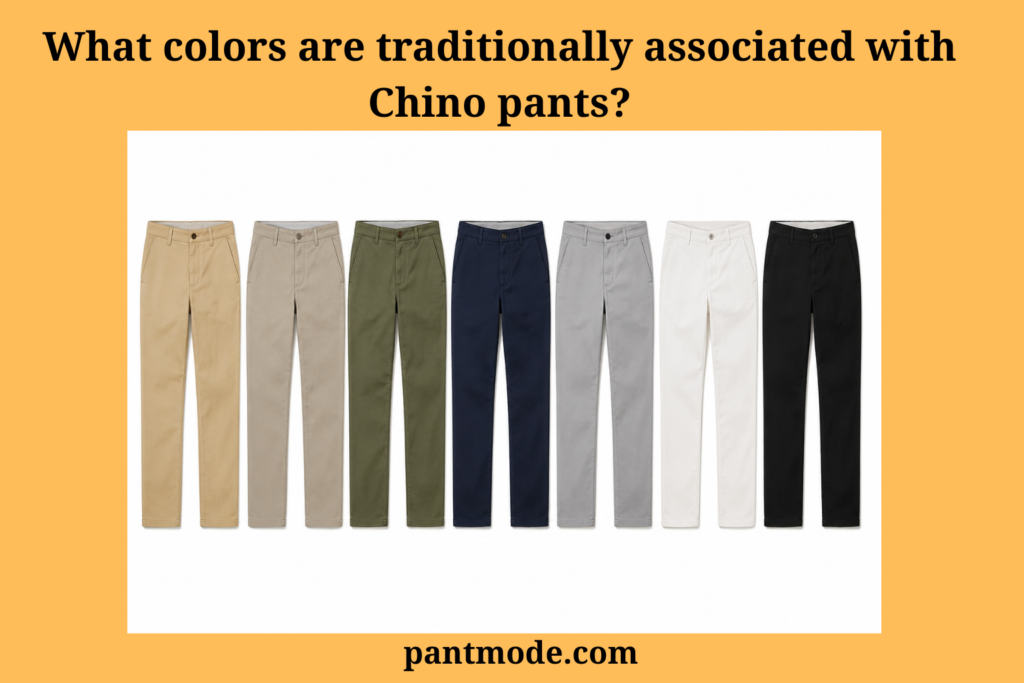
What Colors Are Traditionally Associated With Chino Pants?
Traditional chino pants colors are rooted in military utility and classic menswear, with khaki, navy, olive, stone, and British khaki forming the core heritage chino color palette.
Chino colors are not random fashion shades; they developed from utility, neutrality, cotton twill tradition, and wardrobe versatility. This guide covers color origin, core palette, dress-code selection, outfit pairing, dye preservation, and buying checks for classic chino structure.
Quick Answer: What Colors Are Traditionally Associated With Chino Pants?
Traditional chino pants are most closely associated with khaki, tan, navy, olive, stone, and British khaki. These colors reflect chino history in cotton twill utility trousers while supporting modern menswear use across business casual, smart casual, weekend, and warm-weather outfits.
Definition: Traditional Chino Pants Colors
Traditional chino pants colors are the heritage shades most associated with classic cotton twill chinos. They include khaki and tan earth tones, navy, olive, stone, and British khaki because these colors balance military utility, menswear versatility, seasonal wear, and dress-code flexibility.
Figure: the traditional chino palette combines classic khaki, polished navy, military olive, light stone, and deeper British khaki.
How Did Military Uniforms Shape Traditional Chino Pants Colors?
Military uniforms shaped traditional chino pants colors by favoring muted utility shades that blended into outdoor environments and remained practical for cotton twill trousers.
Chinos are associated with cotton twill trousers, so their earliest color logic favored function, dust resistance, and visual neutrality rather than decorative brightness.
Khaki and dust-toned shades blended into dry outdoor environments more naturally than bright uniform colors. This practical camouflage logic helped anchor khaki, tan, olive, and muted earth tones as heritage chino colors.
Modern chino colors have expanded beyond military shades, but the traditional palette still preserves utility, restraint, and menswear versatility. PantMode explains that military background in military history.
Boundary note: Modern chinos can appear in many colors, but not every modern color belongs to the traditional chino color palette.
Heritage Chino Color Palette Table
| Heritage Chino Color | Historical / Visual Role | Best Modern Use |
|---|---|---|
| Khaki / Tan | Most traditional earth-tone chino shade | Classic casual, summer, and business-casual outfits |
| Navy | Darker, sharper chino neutral | Smart-casual offices and evening casual wear |
| Olive | Military-inspired utility shade | Rugged casual outfits and neutral layering |
| Stone | Lighter, cleaner alternative to khaki | Warm weather and relaxed daytime outfits |
| British Khaki | Deeper, more saturated khaki variation | Classic menswear and transitional seasons |
Which Classic Chino Colors Form the Essential Menswear Foundation?
The essential menswear foundation for classic chino colors includes khaki or tan, navy, olive, stone, and British khaki because each shade serves a distinct wardrobe role.
Khaki or tan is the most traditional chino shade because it carries the strongest link to cotton twill utility and classic warm-weather menswear. Khaki remains central, but it is not the only heritage chino color; PantMode explains the shade itself in khaki color.
Navy is the sharpest darker chino color because its visual weight supports cleaner smart-casual and evening casual outfits. Navy can also show lint, fading, or shine marks more easily than khaki.
Olive is the strongest heritage and military-inspired shade because it connects chinos to utility styling and rugged layering. Olive may feel too casual for stricter business-casual offices.
Stone is the lighter and cleaner warm-weather alternative because it softens the chino’s appearance. Stone shows stains more easily than navy, olive, or British khaki.
British khaki is a deeper and more saturated classic menswear shade because it keeps khaki identity while adding more visual weight. Its deeper tone can feel less summery than pale stone or light khaki.
Boundary note: The best starter chino color depends on wardrobe gaps, climate, dress code, and care habits; every wearer does not need every shade.
Core Chino Color Roles
| Classic Chino Shade | Visual Role | Best Use | Boundary |
|---|---|---|---|
| Khaki / Tan | Most classic and recognizable | Casual, summer, and flexible smart-casual outfits | Not the only traditional chino color |
| Navy | Darker and sharper | Office-casual and evening casual outfits | Can show fading, lint, and shine marks |
| Olive | Military and heritage-driven | Rugged casual and neutral layering | May be too rugged for strict offices |
| Stone | Light and clean | Warm-weather daytime outfits | Shows stains more easily |
| British Khaki | Deeper classic khaki | Transitional seasons and classic menswear | Less airy than pale stone |
How Do You Choose Traditional Chino Shades for Different Dress Codes?
You choose traditional chino shades for different dress codes by matching color depth, contrast, and visual polish to the setting.
For business casual, choose navy, British khaki, or deep khaki because darker visual weight creates a cleaner and more professional appearance. Fit, fabric finish, and shoes still determine final polish.
For smart casual, choose khaki, olive, navy, or stone because these shades balance versatility without looking overdressed. Overly faded or wrinkled fabric can reduce polish.
For weekend casual, choose olive, stone, or light khaki because these colors feel relaxed but intentional. Light colors show stains more easily.
For evening casual, choose navy or deeper khaki because deeper shades create more grounded visual weight. Dark colors may show lint, fading, or shine marks.
For warm-weather daytime, choose stone, light khaki, or tan because pale shades look cooler and softer. Pale chinos need contrast from shirts, belts, or shoes. PantMode explains dress-code positioning in the chino formality.
Boundary note: A chino color is not automatically formal; fabric finish, fit, shirt choice, shoes, and setting decide the final formality level.
Chino Color vs. Formality Decision Matrix
| Dress Code / Setting | Choose This Chino Color | Result | Boundary / Styling Note |
|---|---|---|---|
| Business casual | Navy, British khaki, or deep khaki | Cleaner and more professional appearance | Fit, fabric finish, and shoes still determine polish |
| Smart casual | Khaki, olive, navy, or stone | Balanced versatility without looking overdressed | Avoid overly faded or wrinkled fabric |
| Weekend casual | Olive, stone, or light khaki | Relaxed but intentional styling | Light colors show stains more easily |
| Evening casual | Navy or deeper khaki | More grounded and refined visual weight | Dark colors may show lint, fading, or shine marks |
| Warm-weather daytime | Stone, light khaki, or tan | Cooler and softer visual appearance | Pale shades need contrast from shirts or shoes |
Figure: chino color styling depends on shirt contrast, jacket texture, shoe grounding, layering depth, and color care.
How Should You Build Balanced Outfits Around Classic Chino Colors?
You build balanced outfits around classic chino colors by pairing each shade with shirts, jackets, shoes, and layers that create contrast without fighting the chino’s neutral base.
Khaki chinos pair well with navy, white, denim blue, and olive because those shades create classic menswear contrast. A navy blazer and white Oxford shirt make khaki chinos look clean without losing their casual base.
Navy chinos pair well with white, grey, tan, burgundy, and light blue because lighter or warmer tops prevent the outfit from looking flat. Brown loafers can soften navy’s darker visual weight.
Olive chinos pair well with cream, white, black, denim blue, and brown because grounded neutrals support rugged texture. Olive can look too field-inspired if every piece is similarly muted.
Stone chinos pair well with navy, dark green, brown, and black because darker colors add contrast to a pale base. Stone works best when shoes or outer layers prevent the outfit from looking washed out.
British khaki pairs well with navy, white, brown, denim blue, and forest green because those colors preserve classic earth-tone depth. The shade also connects naturally to wider chinos and khakis fabric logic.
Boundary note: Shoe color and jacket texture affect final formality. Smooth leather feels sharper, while suede, denim, and textured knits feel more casual.
Outfit Color Pairing Matrix
| Chino Color | Best Pairing Colors | Why It Works | Example |
|---|---|---|---|
| Khaki / Tan | Navy, white, denim blue, olive | Creates classic menswear contrast | Khaki chinos with navy blazer and white Oxford shirt |
| Navy | White, grey, tan, burgundy, light blue | Adds contrast so the outfit does not look flat | Navy chinos with grey knit polo and brown loafers |
| Olive | Cream, white, black, denim blue, brown | Works with grounded neutrals and rugged textures | Olive chinos with cream sweater and suede boots |
| Stone | Navy, dark green, brown, black | Adds darker contrast to a pale base | Stone chinos with navy overshirt and dark brown shoes |
| British Khaki | Navy, white, brown, denim blue, forest green | Preserves classic earth-tone depth | British khaki chinos with blue Oxford and brown loafers |
How Can You Prevent Fading in Traditional Chino Pants Colors?
You can prevent fading in traditional chino pants colors by reducing heat, friction, sunlight exposure, harsh detergents, and direct iron contact on cotton twill fabric.
If navy or olive chinos fade too quickly, wash them inside out in cold water. This reduces friction-based dye loss on the visible fabric surface.
If cotton twill loses color depth, use mild detergent and avoid high heat. Lower heat helps preserve the fiber surface and reduces color stress.
If chinos develop shine marks while ironing, use a pressing cloth. A cloth barrier protects the matte finish and reduces direct iron contact.
If light chinos begin yellowing or fading unevenly, store them away from direct sunlight. Shade storage reduces uneven exposure on stone, light khaki, and tan fabrics.
If dark and light chinos are washed together, dye transfer can dull pale colors. Separate dark and light chino colors to preserve clarity.
Boundary note: All chino colors fade over time. Cold washing and air drying slow visible dye loss, but they do not stop fading permanently.
Chino Dye Preservation Checklist
☐ Wash dark chinos inside out: Turning navy or olive chinos inside out reduces friction-based fading.
☐ Use cold water and mild detergent: Lower heat and gentler detergent help preserve cotton twill color depth.
☐ Air dry when possible: Air drying reduces heat stress and shrinkage risk.
☐ Use a pressing cloth when ironing: A cloth barrier prevents shine marks and protects the matte finish.
☐ Store light colors away from direct sunlight: Shade storage reduces uneven fading and yellowing.
☐ Separate dark and light chino colors: Color separation reduces dye transfer and dulling.
What Checklist Should You Use Before Buying Traditional Chino Pants Colors?
Before buying traditional chino pants colors, check wardrobe gaps, dress code, outfit compatibility, maintenance needs, season, and how often the shade will realistically be worn.
Check your wardrobe gap first. Start with the missing foundational shade among khaki, navy, olive, stone, and British khaki.
Check your dress code second. Darker shades usually create more polish, while lighter shades create easier relaxed wear.
Check outfit compatibility with your most-used shirts, shoes, jackets, and layers. A color that pairs with existing pieces will be worn more often.
Check maintenance needs before buying. Dark shades fade faster, while light shades show stains more easily.
Check the season. Light khaki and stone suit warm weather, while navy, olive, and British khaki work across more of the year.
Check use frequency. The best shade is the one that fits your wardrobe and care habits, not the one that only works in a single outfit.
Boundary note: The best chino color is not universal. It depends on your wardrobe gap, setting, season, contrast needs, and willingness to manage fading or stains.
Traditional Chino Color Buying Checklist
☐ Check your wardrobe gap: Start with the missing foundational shade among khaki, navy, olive, stone, and British khaki.
☐ Check your dress code: Choose darker shades for more polish and lighter shades for relaxed wear.
☐ Check outfit compatibility: Pick the color that pairs with your most-used shirts, shoes, jackets, and layers.
☐ Check maintenance needs: Dark shades fade faster, while light shades show stains more easily.
☐ Check the season: Light khaki and stone suit warm weather; navy, olive, and British khaki work year-round.
☐ Check use frequency: Choose the shade you can wear repeatedly, not the shade that only works in one outfit.
Key Takeaway
The strongest traditional chino color wardrobe starts with khaki or tan, navy, olive, stone, and British khaki. Choose darker shades for polish, lighter shades for warm weather, olive for heritage utility, and khaki or British khaki for the most classic chino identity.
Frequently Asked Questions
Traditional chino pants are most closely associated with khaki, tan, navy, olive, stone, and British khaki because these shades connect cotton twill chinos to military utility and classic menswear versatility.
No. Khaki is one of the most traditional chino shades, but navy, olive, stone, tan, and British khaki also belong to the heritage chino color palette.
Navy, British khaki, and deeper khaki usually work best for business casual because their darker visual weight creates a cleaner and more polished appearance.
Prevent chino color fading by washing dark chinos inside out, using cold water, choosing mild detergent, air drying when possible, avoiding direct sunlight, and using a pressing cloth when ironing.
The best first chino color depends on wardrobe gaps and dress-code needs. Khaki or tan is most classic, navy is more polished, olive is more rugged, stone is warm-weather friendly, and British khaki is transitional.
Conclusion
Traditional chino pants colors work best when they are chosen for heritage value, dress-code function, wardrobe compatibility, and realistic maintenance needs.
The core heritage palette includes khaki or tan, navy, olive, stone, and British khaki. These colors came from utility, neutrality, cotton twill tradition, and menswear versatility.
Darker shades usually read more polished, while lighter shades read more relaxed. Dark colors need fading control, while light colors need stain awareness. Choose the chino color that fits your wardrobe gap, setting, season, and care habits.