
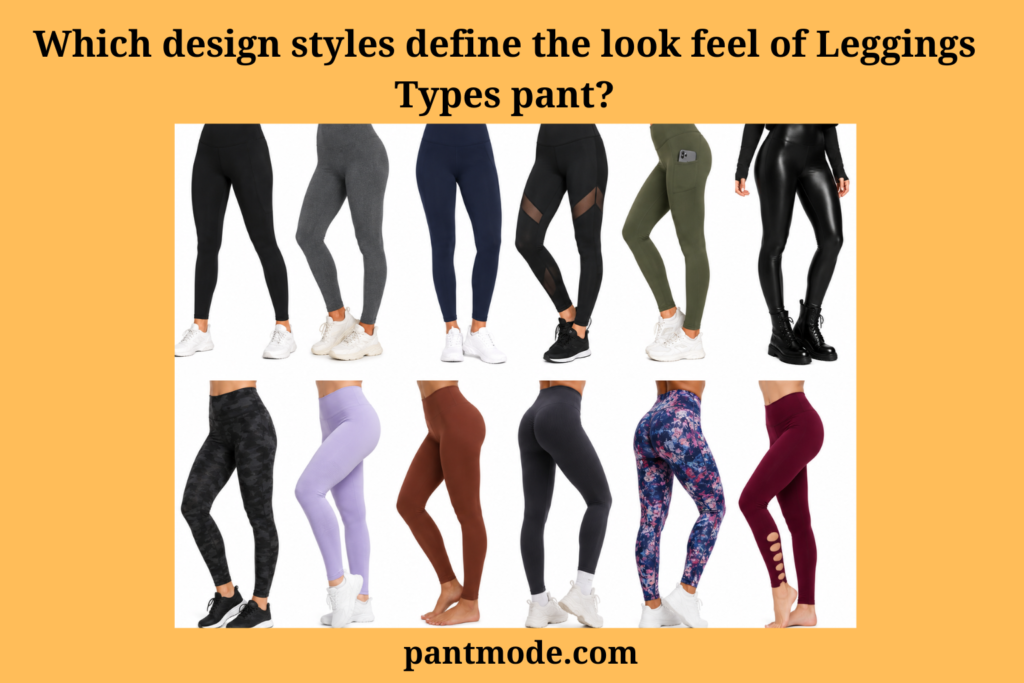
Which design styles define the look feel of Leggings Types pant?
Legging design styles shape how Leggings Types pant look, feel, move, hold, cover, and transition between workouts, lounging, streetwear, and everyday outfits.
Leggings are shaped by construction and fabric composition, not only fabric stretch or color. This guide covers core design features, fabric composition, performance styles, fashion styles, gym-to-street styling, fit troubleshooting, and a final buying checklist without medical compression, circulation, weight-loss, or treatment claims.
Quick Answer: Which Design Styles Define the Look and Feel of Leggings Types Pant?
The design styles that define the look and feel of Leggings Types pant are shaped by waistband structure, seam placement, gusset construction, fabric composition, fabric finish, compression level, hem shape, pocket support, texture, and stretch direction. Performance leggings prioritize support, recovery, opacity, and moisture handling, while fashion leggings use flared hems, split hems, ribbed textures, faux leather finishes, contour lines, and styling details to create everyday or streetwear looks.
Definition: Legging Design Styles
Legging design styles refer to the construction, fabric, and styling choices that change how leggings look, feel, move, and function. These choices include waistband height, seam type, gusset shape, fabric composition, fabric finish, compression level, pocket placement, stretch direction, and hem shape.
Figure: legging design styles are shaped by waistband shape, seams, fabric finish, hem style, and use case.
What Core Design Features Define the Look and Feel of Leggings?
Core legging design features include seam type, waistband shape, gusset construction, fabric finish, pocket placement, compression level, stretch direction, and hem shape.
Flatlock seams help reduce seam friction. They suit running, HIIT, and walking because they create a more athletic and streamlined look. Raised seam edges can still rub during repeated movement.
High-rise waistbands add hold and coverage. They work for squats, daily wear, and travel. Weak recovery, wrong size, or poor rise can still cause rolling.
Crossover waistbands create a sculpted fashion line. They suit casual outfits, yoga, and fashion styling. Very low crossover designs may reduce support during high-impact movement.
Seamless waistbands smooth the waist feel. They suit lounging, yoga, and sensitive comfort. Seamless designs still need compression and recovery to stay in place.
Diamond or triangle gussets support movement comfort. They help during yoga, Pilates, and lifting by reducing seam pressure. Poor gusset placement can still cause sagging or pulling.
Side pockets and ribbed texture change function and mood. Pockets add storage for walking or errands, while ribbed texture adds cozy visual dimension. Heavy phones can pull weak waistbands, and weak rib recovery can stretch out.
Flared hems change leggings into a trouser-like shape. They can create a longer line for everyday outfits, but hem length must be controlled to avoid dragging.
For how stretch affects movement and fit, compare leggings stretch comfort.
Boundary note: no single design feature guarantees comfort or performance. Fabric, size, use case, and construction must work together.
Legging Design Feature Table
| Design Feature | Primary Benefit | Best Use Case | Style Effect | Warning Sign |
|---|---|---|---|---|
| Flatlock seams | Helps reduce seam friction | Running, HIIT, walking | Athletic and streamlined | Raised seam rubs |
| High-rise waistband | Adds hold and coverage | Squats, daily wear, travel | Secure and supportive | Rolls or folds |
| Crossover waistband | Shapes waist visually | Casual outfits, yoga, fashion | Sculpted look | Low support during impact |
| Seamless waistband | Smooths waist feel | Lounging, yoga, sensitive comfort | Minimal and clean | Slides down |
| Diamond gusset | Improves movement comfort | Yoga, Pilates, lifting | Better panel shaping | Poor placement causes sag |
| Side pockets | Adds storage | Walking, errands, gym | Practical activewear | Pocket pulls fabric |
| Ribbed texture | Adds dimension | Lounging, casual fashion | Cozy and premium | Can stretch out |
| Flared hem | Mimics trouser shape | Everyday outfits | Longer leg line | Drags or pools |
How Does Fabric Composition Change Legging Design Style and Function?
Fabric composition changes legging design style and function by controlling stretch feel, recovery, compression, opacity, breathability, warmth, texture, pilling risk, and styling purpose.
Nylon-spandex feels smooth, supportive, and performance-focused. It often supports strong recovery and movement for running, HIIT, strength training, and activewear leggings. It can slide down if waistband structure is weak.
Polyester-spandex feels durable and quick-drying. It suits gym workouts, walking, and hot-weather wear, but it may feel less soft than nylon blends.
Brushed polyester-spandex feels soft and flexible. It suits yoga, Pilates, lounging, and casual wear. High-friction activity can increase pilling risk.
Cotton-elastane and modal-spandex feel casual and comfortable. Cotton-elastane is breathable and natural-feeling, while modal-spandex is soft and drapey. Both can offer less compression or weaker long-term recovery than performance blends.
Seamless knit and compression knit serve different comfort goals. Seamless knit reduces seam friction, while compression knit offers firm hold and opacity. Neither should be framed as medical compression therapy.
Faux leather coated stretch, ribbed stretch knit, and thermal fleece-lined stretch change the fashion mood. Faux leather creates polish, ribbed knit adds texture, and fleece-lined stretch adds warmth. Each must still pass comfort, opacity, recovery, and activity checks.
For fabric basics across casual bottoms, compare cut and fabric.
Boundary note: one fabric composition is not best for every activity or outfit. Higher spandex or elastane content is not automatically better.
Fabric Composition Table
| Fabric / Composition | Design Feel | Functional Strength | Best Use Case | Watch-Out |
|---|---|---|---|---|
| Nylon-spandex | Smooth, supportive | Strong recovery, flexible stretch | Running, HIIT, strength training | Can slide if waistband is weak |
| Polyester-spandex | Durable, quick-drying | Moisture handling and stability | Gym, walking, hot-weather wear | May feel less soft |
| Brushed polyester-spandex | Soft, flexible | Gentle stretch | Yoga, Pilates, lounging | Can pill with friction |
| Cotton-elastane | Breathable, casual | Soft low-intensity comfort | Lounging, errands | May lose recovery faster |
| Modal-spandex | Soft, drapey | Relaxed stretch comfort | Travel, all-day comfort | Less compression |
| Seamless knit blend | Smooth, minimal | Reduces seam friction | Yoga, daily comfort | Needs waist recovery |
| Compression knit | Firm, athletic | Hold, opacity, recovery | Strength, HIIT | Restrictive for lounging |
| Faux leather coated stretch | Sleek, shiny | Streetwear polish | Night outfits | Warmer, less breathable |
| Ribbed stretch knit | Textured, cozy | Visual dimension | Casual fashion | Can stretch out |
| Thermal fleece-lined stretch | Warm, thicker | Insulation | Cold-weather walking | Can reduce flexibility |
Figure: performance leggings prioritize recovery, opacity, waistband security, and breathability; fashion leggings prioritize finish, hem, texture, and outfit range.
Which Legging Design Styles Work Best for High-Impact Workouts?
High-impact workout leggings work best when compression, waistband security, fabric recovery, opacity, seam comfort, pocket stability, and breathability match the activity.
Running leggings need pocket performance design. Medium-firm support, a drawcord waistband, and a stable phone pocket help reduce slipping and pocket drag. Avoid weak waistbands.
HIIT and CrossFit-style leggings need recovery and gusset support. Structured performance knit and firm support can work when the fabric stays opaque and the gusset supports repeated movement. Avoid thin fabric.
Strength training leggings need squat-proof testing. Squat-proof leggings should stay opaque under stretch and bright light. Avoid assuming all dark leggings pass this test.
Cycling and spin leggings need low-friction seams. Smooth-seam leggings reduce bulk and friction during repeated pedaling. Avoid bulky thigh pockets.
Heavy-sweat workouts need moisture-aware fabric. Polyester-spandex or ventilated construction can help manage sweat feel, but cotton-heavy fabric may hold moisture and feel heavy.
Outdoor walking, yoga, Pilates, travel, and all-day wear need softer activity matching. Light-medium compression, breathable fabric, gusseted movement, and non-digging waistbands are more important than maximum compression.
Boundary note: workout leggings should be chosen by movement pattern, not only by compression level.
Activity Decision Matrix
| Activity | Best Design Style | Compression Level | Key Feature | Best Fabric Direction | Avoid |
|---|---|---|---|---|---|
| Running | Pocket performance leggings | Medium-firm | Drawcord + phone pocket | Nylon-spandex | Weak waistband |
| HIIT / CrossFit | Compression leggings | Firm | Recovery + gusset | Structured performance knit | Thin fabric |
| Strength training | Squat-proof leggings | Medium-firm | Opacity + stable waist | Nylon-spandex / compression knit | Sheerness |
| Cycling / spin | Smooth-seam leggings | Medium | Low-friction seams | Slick performance blend | Bulky thigh pockets |
| Heavy sweat workouts | Ventilated leggings | Medium | Mesh / perforation | Polyester-spandex | Cotton-heavy fabric |
| Outdoor walking | Pocket leggings | Light-medium | Breathability + storage | Quick-dry blend | Overheating fabric |
| Yoga / Pilates | 4-way stretch leggings | Light-medium | Gusset + soft stretch | Brushed stretch blend | Restrictive seams |
| Travel / all-day wear | Soft functional leggings | Light-medium | Non-digging waistband | Modal / nylon / brushed blend | Tight top seam |
Which Fashion-Focused Legging Styles Elevate Everyday Outfits?
Fashion-focused legging styles elevate everyday outfits through hem shape, fabric finish, texture, shine, contouring, print, and how the leggings pair with tops, outerwear, and footwear.
Flared leggings create a longer trouser-like line. They pair well with fitted tees, cropped jackets, platforms, and ankle boots. Avoid dragging hems.
Split-hem leggings create footwear-focused polish. They pair with knit tops, blazers, loafers, and sleek sneakers. Too-long inseams can distort the effect.
Ribbed leggings create cozy texture. They pair with oversized sweaters, coats, sneakers, and boots. Weak recovery can stretch out.
Stirrup leggings create a retro sleek line. They pair with tailored coats, fitted knits, pumps, and loafers. Watch for foot pulling.
Faux leather leggings create edgy streetwear polish. They pair with blazers, long coats, boots, and clean sneakers. They may feel warmer and less breathable than knit leggings.
Seamless contour, minimal ankle, and printed leggings each need outfit restraint. Contour designs can look athletic, minimal ankle leggings work well for skirt layering, and printed leggings need a solid top to avoid pattern overload.
For broader everyday outfit context, compare casual pants.
Boundary note: fashion leggings still need comfort, opacity, recovery, and care practicality.
Fashion Legging Style Matrix
| Fashion Style | Aesthetic Impact | Best Top Pairing | Best Footwear | Avoid |
|---|---|---|---|---|
| Flared leggings | Long, trouser-like line | Fitted tee, cropped jacket | Platforms, ankle boots | Dragging hem |
| Split-hem leggings | Footwear-focused polish | Knit top, blazer | Loafers, sleek sneakers | Too-long inseam |
| Ribbed leggings | Cozy texture | Oversized sweater | Sneakers, boots | Weak recovery |
| Stirrup leggings | Retro sleek line | Tailored coat, fitted knit | Pumps, loafers | Foot pulling |
| Faux leather leggings | Edgy streetwear polish | Blazer, long coat | Boots, clean sneakers | Overheating |
| Seamless contour leggings | Athletic sculpted look | Cropped sweatshirt | Trainers | Too gym-specific |
| Minimal ankle leggings | Clean layering base | Oversized shirt, trench | Ballet flats, sneakers | No structure on top |
| Printed leggings | Statement outfit | Solid top | Simple sneakers | Pattern overload |
How Do You Style Different Legging Design Styles From Gym to Street?
You style different legging design styles from gym to street by matching the legging type with the right top layer, footwear, outerwear, and outfit purpose.
Gym-to-errands styling uses pocket performance leggings. A cropped hoodie and trainers create a functional casual result while keeping pockets useful.
Casual streetwear styling uses faux leather leggings. A bomber, graphic tee, and chunky sneakers create an edgy streetwear result.
Polished everyday styling uses matte ankle leggings. A button-down, blazer, loafers, or leather sneakers can make leggings look clean and intentional.
Cozy casual styling uses ribbed leggings. An oversized knit, coat, sneakers, or ankle boots can feel soft but styled.
Night styling works with stirrup or split-hem leggings. A fitted knit, coat, pointed shoes, or boots creates a sleeker elevated line.
Yoga-to-cafe and travel styling need comfort-first coordination. Seamless leggings with an oversized shirt or high-waist compression leggings with a cardigan can feel relaxed, neat, and easy to move in.
For base-layer use, compare leggings under dresses and leggings under skirts.
Boundary note: leggings look more intentional when the top layer adds structure or the fabric finish matches the outfit mood.
Gym-to-Street Outfit Formula Table
| Style Goal | Legging Type | Top Layer | Footwear | Result |
|---|---|---|---|---|
| Gym-to-errands | Pocket performance leggings | Cropped hoodie | Trainers | Functional casual |
| Casual streetwear | Faux leather leggings | Bomber / graphic tee | Chunky sneakers | Edgy streetwear |
| Polished everyday | Matte ankle leggings | Button-down + blazer | Loafers / leather sneakers | Clean and intentional |
| Cozy casual | Ribbed leggings | Oversized knit + coat | Sneakers / ankle boots | Soft but styled |
| Night look | Stirrup / split-hem leggings | Fitted knit + coat | Pointed shoes / boots | Sleek and elevated |
| Yoga-to-cafe | Seamless leggings | Oversized shirt | White sneakers | Relaxed coordination |
| Travel | High-waist compression leggings | Cardigan / utility jacket | Slip-ons | Comfortable and neat |
How Can Legging Design Features Fix Rolling, Sheerness, and Front-Seam Pulling?
Legging design features can fix rolling, sheerness, and front-seam pulling when the waistband, fabric density, gusset shape, pocket support, recovery, seams, and compression match the wearer’s movement.
Waistband rolling usually comes from weak recovery or low rise. A high wide waistband or drawcord helps when the size and rise are correct. The pass standard is a waistband that stays flat.
Sheerness usually comes from thin or overstretched fabric. Dense squat-proof knit helps when it stays opaque in a squat under bright light.
Front-seam pulling can come from a harsh center seam or poor gusset. A seamless front or diamond gusset can create a smoother front fit without body-shaming language.
Pocket drag comes from weak waistband support or heavy pockets. Reinforced pockets and stable waist construction help when the phone or keys do not pull the fabric downward.
Knee bagging comes from poor fabric recovery. Performance stretch fabric helps when it snaps back after bending.
Seam irritation comes from raised or rough seams. Flatlock or seamless construction helps when repeated walking and lunging do not create rubbing.
Fabric pilling comes from using the wrong fabric for the activity. Abrasion-resistant blends help when the surface stays smoother longer.
Waistband digging comes from a narrow or too-tight waistband. A wide soft waistband helps when it feels secure without sharp pressure.
Boundary note: fit issues should be solved through fabric, construction, sizing, and movement needs—not body criticism.
Fit Troubleshooting Checklist
| Fit Issue | Likely Cause | Design Feature That Helps | Pass Standard |
|---|---|---|---|
| Waistband rolling | Weak recovery / low rise | High wide waistband, drawcord | Stays flat |
| Sheerness | Thin or overstretched fabric | Dense squat-proof knit | Opaque in squat |
| Front-seam pulling | Harsh center seam / poor gusset | Seamless front or diamond gusset | Smooth front fit |
| Pocket drag | Weak waistband / heavy pocket | Reinforced pocket + stable waist | No pulling downward |
| Knee bagging | Poor recovery | Performance stretch fabric | Snaps back |
| Seam irritation | Raised seams | Flatlock or seamless construction | No rubbing |
| Fabric pilling | Wrong fabric for activity | Abrasion-resistant blend | Surface stays smoother |
| Waist digging | Narrow or too-tight waistband | Wide soft waistband | Secure without pressure |
What Checklist Helps You Evaluate Legging Design Styles Before Buying?
A good legging design buying checklist tests activity match, waistband support, stretch direction, fabric recovery, opacity, gusset shape, seam comfort, pocket stability, hem style, fabric finish, styling range, and care practicality.
Activity match: test whether the design supports your main workout, travel day, base-layer outfit, or fashion use.
Waistband support: sit, bend, and squat to check whether the waistband stays flat without rolling, digging, or sliding.
Stretch direction and recovery: stretch the fabric and release it to check whether it returns smoothly without rippling.
Opacity: test the fabric in a squat under bright light before calling it squat-proof.
Gusset and seam comfort: walk, lunge, and bend to check whether the gusset supports movement and seams avoid rubbing.
Pocket stability: load a phone or keys and check whether the pocket pulls the leg fabric downward.
Hem style and footwear: test flared, split, stirrup, or ankle hems with the shoes you actually wear.
Fabric finish and styling range: check whether matte, ribbed, faux leather, brushed, printed, or seamless finishes match your real outfits.
Care practicality: confirm that the care label fits your washing routine.
For full pants taxonomy context, compare all pant types.
Boundary note: the checklist should reflect the reader’s main activity and real wardrobe, not one universal leggings rule.
Final Legging Design Buying Checklist
| Buying Check | Yes / No |
|---|---|
| Does the design match your main activity or styling purpose? | |
| Does the waistband stay flat when sitting, bending, and squatting? | |
| Does the fabric stretch comfortably in the needed directions? | |
| Does the fabric recover after being stretched? | |
| Does the fabric stay opaque during a squat test? | |
| Does the gusset reduce seam pressure and support movement? | |
| Do the seams feel smooth during walking and lunging? | |
| Do pockets stay stable when carrying a phone or keys? | |
| Does the hem style work with your footwear? | |
| Does the fabric finish match your desired look and comfort level? | |
| Can you style the leggings in at least three real outfits? | |
| Does the care label match your washing routine? |
Key Takeaway
The best legging design style depends on the intended use. For workouts, prioritize recovery, opacity, waistband security, seam comfort, and activity-specific fabric. For fashion outfits, prioritize hem shape, fabric finish, texture, silhouette, and styling range. In every case, test stretch, opacity, waistband hold, pocket stability, fabric recovery, and care practicality before buying.
Frequently Asked Questions
Legging design styles are defined by waistband structure, seam placement, gusset construction, fabric composition, fabric finish, compression level, hem shape, pocket support, texture, and stretch direction.
Yes. Performance leggings prioritize support, recovery, opacity, waistband security, and movement comfort, while fashion leggings emphasize hem shape, fabric finish, texture, silhouette, and outfit range.
Squat-proof leggings should stay opaque under deep stretch and bright light. Opacity should be tested during movement rather than assumed from color or fabric thickness alone.
Leggings may roll at the waist because of weak recovery, low rise, wrong size, narrow waistband construction, or a waistband top edge that lacks reinforcement.
Check activity match, waistband hold, stretch direction, fabric recovery, opacity, gusset shape, seam comfort, pocket stability, hem style, fabric finish, styling range, and care practicality.
Conclusion
Legging design styles work best when waistband shape, seam placement, gusset construction, fabric composition, fabric finish, compression, pockets, hem shape, stretch direction, and styling purpose support the same use case.
Leggings design is shaped by construction details and fabric composition, not only fabric color or stretch.
Performance leggings should prioritize recovery, opacity, support, breathability, and movement comfort.
Fashion leggings should prioritize hem shape, fabric finish, texture, styling range, and outfit balance.
Choose leggings by testing activity match, waistband hold, fabric composition, stretch direction, recovery, opacity, gusset shape, seam comfort, pocket stability, hem style, fabric finish, styling range, and care practicality.