
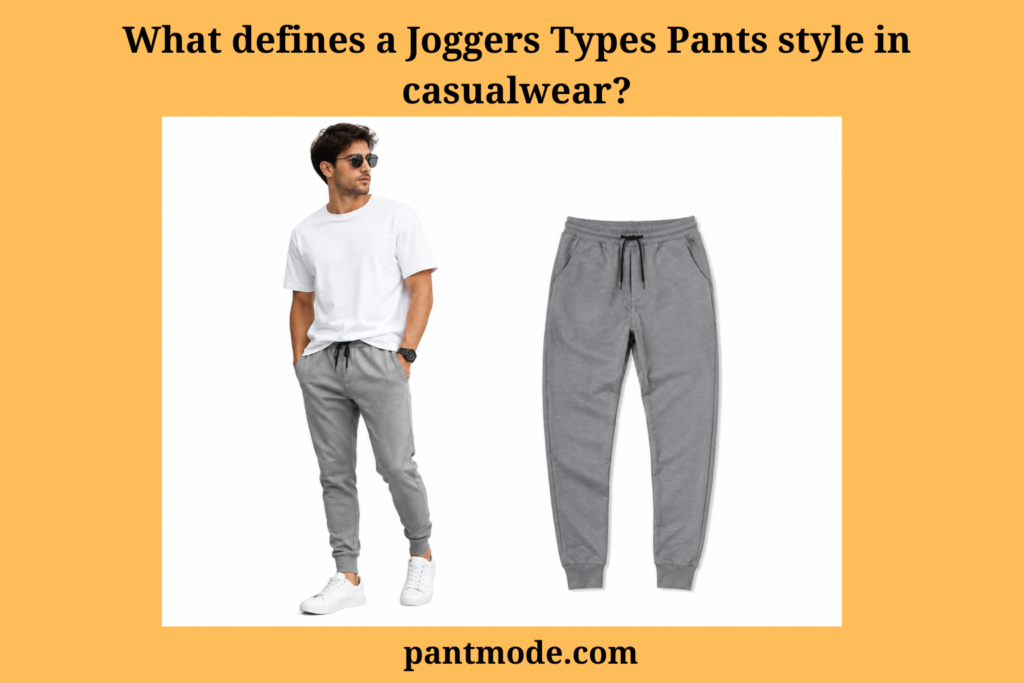
What Defines the Jogger Pants Style in Modern Casualwear? A Complete Guide
Jogger pants style is defined by a tapered casual pant silhouette with an adjustable or flexible waistband, cuffed ankle, comfort-focused fabric, and modern styling flexibility.
Joggers are not defined by softness alone; they are defined by waistband type, leg taper, cuff placement, fabric behavior, pocket structure, and styling context. This guide covers physical traits, style context, fabric selection, outfit formulas, styling mistakes, and fit testing for modern joggers that work across casual pants settings.
Quick Answer: What Defines the Jogger Pants Style?
Jogger pants style is defined by a tapered casual pant silhouette with an elastic, adjustable, or flexible waistband, a controlled leg taper, a cuffed ankle, comfort-focused fabric, and practical pocket or hardware details. Modern joggers can work for lounging, errands, travel, streetwear, and some smart-casual outfits when the fabric, cuff, fit, and footwear are controlled.
Definition: Jogger Pants Style
Jogger pants style refers to a casual pant design that usually combines an elastic or adjustable waistband, tapered leg, cuffed ankle, and comfortable fabric. Joggers differ from loose sweatpants because they control the ankle and leg shape, and they differ from formal trousers because comfort, flexibility, and casual styling remain central.
Figure: jogger pants style is built from waistband adjustability, taper, cuff control, comfort fabric, and footwear compatibility.
What Physical Traits Define the Modern Jogger Pants Style?
The modern jogger pants style is defined by an adjustable waistband, tapered leg, cuffed ankle, comfort-focused fabric, and practical pocket or hardware details.
Joggers usually feature an elasticized, adjustable, or partially flexible waistband. The waistband gives joggers athletic comfort and easy adjustability, even when the outer appearance is refined. A drawstring waistband, hidden internal cord, or flat-front waistband with back elastic can all fit the category, but visible drawstrings look more casual than hidden adjustment.
Joggers usually have a tapered leg from knee to ankle. The taper creates the streamlined jogger silhouette and separates the style from baggy sweatpants. A relaxed thigh that narrows steadily below the knee looks balanced, but extreme taper can look too tight.
Joggers commonly finish with an elastic, ribbed, or structured cuff. The cuff controls the ankle shape and keeps the pant from pooling over footwear. A ribbed ankle cuff that sits cleanly at or just above the shoe works well, but loose cuffs can bunch and look sloppy.
Joggers rely on casual comfort fabrics with different structure levels. Fabric decides whether the jogger reads as lounge, athletic, streetwear, travel, or smart-casual. French terry looks relaxed, nylon blends look technical, and twill joggers look more polished, but fabric must match the setting.
Joggers often use practical pocket and hardware details. Zippered pockets, flat side pockets, hidden drawstrings, and tonal hardware affect how casual or elevated the jogger looks. Hidden zipper pockets make a jogger cleaner than bulky cargo-style pockets, but bulky pockets lower polish.
For construction details, see jogger construction. For joggers compared with sweatpants, use sweatpants vs joggers.
Boundary note: not every cuffed casual pant has the same formality level. Fabric, taper, cuff placement, and styling decide whether joggers look lounge-ready, streetwear-focused, or smart-casual.
Jogger Physical Trait Rule Blocks
| Trait | Reason | Example | Boundary |
|---|---|---|---|
| Elasticized, adjustable, or partially flexible waistband | The waistband gives joggers athletic comfort and easy adjustability, even when the outer appearance is refined | Drawstring waistband, hidden internal cord, or flat-front waistband with back elastic | Visible drawstrings look more casual than hidden adjustment |
| Tapered leg from knee to ankle | The taper creates the streamlined jogger silhouette and separates the style from baggy sweatpants | Relaxed thigh that narrows steadily below the knee | Extreme taper can look too tight |
| Elastic, ribbed, or structured cuff | The cuff controls the ankle shape and keeps the pant from pooling over footwear | Ribbed ankle cuff that sits cleanly at or just above the shoe | Loose cuffs can bunch and look sloppy |
| Casual comfort fabric | Fabric decides whether the jogger reads as lounge, athletic, streetwear, travel, or smart-casual | French terry looks relaxed, nylon blends look technical, and twill joggers look more polished | Fabric must match the setting |
| Practical pocket and hardware details | Zippered pockets, flat side pockets, hidden drawstrings, and tonal hardware affect how casual or elevated the jogger looks | Hidden zipper pockets make a jogger cleaner than bulky cargo-style pockets | Bulky pockets lower polish |
Why Have Tapered Joggers Become Essential in Everyday Casualwear?
Tapered joggers have become essential in everyday casualwear because they combine sneaker-friendly ankle control, comfort-first dressing, streetwear influence, and flexible styling.
Sneaker-focused styling made ankle control more important. Jogger cuffs expose and frame footwear better than wide or pooling hems. The pant naturally works with clean sneakers, retro runners, and casual streetwear shoes, but footwear must still match fabric and occasion.
Comfort-first dressing became more accepted in public settings. People now want pants that feel relaxed but still look intentional. Structured joggers bridge the gap between loungewear and styled casual outfits, but structure separates public-wear joggers from lounge-only pants.
Athleisure and streetwear changed how casual pants are judged. Taper, fabric, cuff, and shoe pairing now matter as much as traditional tailoring details. Joggers can look modern when they are fitted, clean, and styled with balanced layers, but athletic details should stay controlled.
Hybrid work and travel increased demand for flexible clothing. Joggers offer movement and comfort without always looking like gym wear. Tailored jogger pants can work for errands, travel, creative offices, and relaxed social settings, but strict workplaces may still reject joggers.
For broader styling context, compare this page with joggers and joggers.
Boundary note: popularity does not make every jogger appropriate for every setting. Fit, fabric, cuff, and shoe choice still control the final signal.
Jogger Style Context Blocks
| Context Shift | Style Impact | Practical Result | Boundary |
|---|---|---|---|
| Sneaker-focused styling made ankle control more important | Jogger cuffs expose and frame footwear better than wide or pooling hems | The pant naturally works with clean sneakers, retro runners, and casual streetwear shoes | Footwear must still match fabric and occasion |
| Comfort-first dressing became more accepted in public settings | People now want pants that feel relaxed but still look intentional | Structured joggers bridge the gap between loungewear and styled casual outfits | Structure separates public-wear joggers from lounge-only pants |
| Athleisure and streetwear changed how casual pants are judged | Taper, fabric, cuff, and shoe pairing now matter as much as traditional tailoring details | Joggers can look modern when they are fitted, clean, and styled with balanced layers | Athletic details should stay controlled |
| Hybrid work and travel increased demand for flexible clothing | Joggers offer movement and comfort without always looking like gym wear | Tailored jogger pants can work for errands, travel, creative offices, and relaxed social settings | Strict workplaces may still reject joggers |
Which Jogger Fabrics Work Best for Lounging, Travel, Streetwear, and Smart-Casual Outfits?
The best jogger fabric depends on whether the goal is lounging, travel, workouts, streetwear, smart-casual styling, cold-weather comfort, or polished casualwear.
French terry joggers work best for lounging and errands because the fabric feels soft and relaxed. The style effect is low-to-medium casual polish, but French terry can look too casual for smart-casual settings.
Fleece joggers work best for cold casualwear because they offer warmth and comfort. The style effect is relaxed and seasonal, but fleece is usually not ideal for smart-casual dinners.
Technical nylon blend joggers work best for travel and workouts because they resist wrinkles and support movement. The style effect is modern and active, but shiny gym finishes reduce polish.
Twill or chino cotton joggers work best for smart-casual outfits because cotton structure gives a cleaner line. The style effect is more refined, but skinny fit can restrict movement and look forced.
Ponte knit joggers work best for polished comfort because they combine softness with smoother drape. The style effect is refined casual, but thin ponte can cling and look base-layer-like.
Wool-blend joggers work best for elevated casual outfits in fall and winter. The style effect is higher formality, but wool blends need clean footwear and careful care.
For more refined comfort rules, use polished comfort.
Boundary note: fabric determines jogger formality more than the word “jogger” itself. No single fabric is universally best.
Jogger Fabric Selection Matrix
| Fabric Type | Best Use | Formality Level | Season | Best Shoes | Avoid |
|---|---|---|---|---|---|
| French terry | Lounging, errands | Low-medium | Spring / fall | Clean sneakers | Dress shoes |
| Fleece | Cold casualwear | Low-medium | Winter | Retro runners, boots | Smart-casual dinners |
| Technical nylon blend | Travel, workouts | Medium | Year-round | Trainers, slip-ons | Shiny gym finish |
| Twill / chino cotton | Smart casual | Medium-high | Year-round | Leather sneakers, loafers | Skinny fit |
| Ponte knit | Polished comfort | Medium-high | Fall / travel | Loafers, minimal sneakers | Thin clingy fabric |
| Wool blend | Elevated casual | High | Fall / winter | Chukkas, loafers, boots | Sporty hoodies |
Figure: joggers look intentional when fabric, top layer, footwear, cuff line, and use case support the same outfit direction.
How Do You Elevate Tailored Joggers Beyond Gym Wear?
You elevate tailored joggers beyond gym wear by choosing structured fabric, controlling the cuff, adding polished layers, and matching footwear to the jogger’s formality.
Weekend errands work with French terry or twill joggers. A tee, overshirt, and leather sneakers create clean casual style. The boundary is softness: if the jogger is very soft, the top layer needs more structure.
Travel works with technical or ponte joggers. A tee, bomber, and slip-ons create a comfortable and neat outfit. The boundary is fabric finish: shiny nylon can look too gym-like.
Streetwear works with tech fleece joggers. A hoodie, cropped jacket, and retro runners create an urban styled outfit. The boundary is proportion: oversized top layers need clean taper below.
Smart-casual dinner works with twill, ponte, or wool-blend joggers. A knit polo, blazer, and loafers or leather sneakers create elevated casual style. The boundary is formality: not every jogger is dinner-appropriate.
Creative casual office outfits work with dark refined joggers. A fine knit, overshirt, and minimal sneakers create relaxed professionalism. The boundary is workplace culture: strict offices may reject joggers.
Cold-weather casual works with fleece or wool-blend joggers. Knitwear, a padded jacket, and chukkas or chunky sneakers create warmth and balance. The boundary is bulk: heavy joggers still need clean cuff placement.
Boundary note: soft joggers need more structured styling. Do not assume every jogger can become smart-casual simply by adding dressier shoes.
Occasion Outfit Formula Table
| Occasion | Jogger Type | Top Layer | Footwear | Result |
|---|---|---|---|---|
| Weekend errands | French terry / twill | Tee + overshirt | Leather sneakers | Clean casual |
| Travel | Technical / ponte | Tee + bomber | Slip-ons | Comfortable and neat |
| Streetwear | Tech fleece | Hoodie + cropped jacket | Retro runners | Urban and styled |
| Smart-casual dinner | Twill / ponte / wool blend | Knit polo + blazer | Loafers / leather sneakers | Elevated casual |
| Creative office | Dark refined joggers | Fine knit + overshirt | Minimal sneakers | Relaxed professionalism |
| Cold weather | Fleece / wool blend | Knitwear + padded jacket | Chukkas / chunky sneakers | Warm and balanced |
What Styling Mistakes Ruin the Jogger Pants Style in Public?
Jogger pants style looks sloppy in public when the fit sags, the shoes clash, the knees bag, the outfit looks pajama-like, the cuffs bunch, the drawstrings dominate, or the calves cling.
Seat or crotch bunching happens when the rise or hip fit is wrong. Choose a better rise and cleaner hip fit so the silhouette looks sharper.
Formality clash happens when shoes look too dressy or too athletic for the jogger fabric. Use sneakers, chukkas, loafers, or boots that match the jogger’s fabric and occasion.
Knee bagging happens when the fabric lacks recovery. Choose recovery fabric so the jogger holds shape longer after sitting and walking.
Pajama-like styling happens when a soft top and soft joggers collapse together. Add a structured layer to make the outfit more intentional.
Cuff bunching happens when the inseam is too long or the cuff is too loose. Use a shorter inseam or better cuff so the leg line looks cleaner.
Loud drawstrings make the waist look sporty. Hide the drawstring or choose tonal drawcords for a more refined waistband.
Tight calves come from extreme taper or wrong sizing. Choose controlled taper so the jogger keeps proportion without clinging.
Boundary note: most jogger mistakes come from mismatch between fabric, fit, shoe, and setting. Fix construction and styling before blaming body shape.
Jogger Mistake-Fix Table
| mistake | Warning Signal | Fix | Result |
|---|---|---|---|
| Seat/crotch bunching | Saggy fabric | Better rise and hip fit | Cleaner silhouette |
| Formality clash | Shoes look too dressy | Use sneakers, chukkas, loafers, or boots | Balanced outfit |
| Knee bagging | Knees stretch out | Choose recovery fabric | Longer shape retention |
| Pajama look | Soft top + soft joggers | Add structured layer | More intentional styling |
| Cuff bunching | Fabric piles at ankle | Shorter inseam / better cuff | Cleaner leg line |
| Loud drawstrings | Waist looks sporty | Hide or choose tonal drawcords | Refined waistband |
| Tight calves | Fabric clings | Choose controlled taper | Better proportion |
How Can You Check the Perfect Fit and Proportion for Jogger Pants?
You can check the perfect fit and proportion for jogger pants by testing the waist, seat, thighs, knees, calves, ankle cuff, pockets, and footwear compatibility.
Waist fit: the waistband should feel secure without needing a tight drawstring. Slipping or digging means the waist is not balanced.
Seat and crotch fit: the seat should have room without sagging. A droopy seat makes the jogger look sloppy.
Thigh room: the thigh should allow about 1–2 inches of pinchable fabric. Too little fabric looks tight, while too much fabric looks baggy.
Knee recovery: the knees should bend and recover after movement. Bagging or pulling shows poor fabric recovery or poor fit.
Calf taper: the calves should taper naturally. Clinging or twisting means the taper is too aggressive.
Ankle cuff placement: the cuff should sit at the shoe line. Pooling or riding high breaks the jogger proportion.
Pocket flatness: pockets should lie flat. Flaring or bulging makes the hip and thigh line look wider.
Footwear compatibility: the cuff and shoe should balance visually. Formality or bulk clashes show the outfit direction is mismatched.
Boundary note: fit should be tested while sitting, walking, bending, and wearing real shoes. Skinny joggers are not the default ideal.
Final 8-Point Jogger Fit Test
| Fit Area | Pass Standard | Warning Sign |
|---|---|---|
| Waist | Secure without tight drawstring | Slips or digs |
| Seat/crotch | Room without sagging | Droopy seat |
| Thighs | 1–2 inches pinchable fabric | Too tight or too baggy |
| Knees | Bends and recovers | Bagging or pulling |
| Calves | Natural taper | Clinging or twisting |
| Ankles | Cuff sits at shoe line | Pooling or riding high |
| Pockets | Lie flat | Flaring or bulging |
| Footwear | Cuff and shoe balance | Formality or bulk clash |
Key Takeaway
Jogger pants style works best when the waistband feels comfortable, the leg tapers cleanly, the cuff sits at the shoe line, the fabric matches the occasion, and the outfit avoids pajama or gym-wear signals. Judge joggers by fabric, taper, cuff, footwear, and fit—not softness alone.
Frequently Asked Questions
Jogger pants style is defined by a tapered casual pant silhouette with an elastic, adjustable, or flexible waistband, a controlled leg taper, a cuffed ankle, comfort-focused fabric, and practical pocket or hardware details.
Joggers differ from loose sweatpants because joggers usually control the leg shape through taper and ankle cuffs, while sweatpants can be looser and less structured.
The best jogger fabric depends on the setting. French terry works for lounging and errands, technical nylon works for travel or workouts, twill and ponte work for polished casual outfits, and wool blends work for elevated cold-weather styling.
Joggers should fit securely at the waist, allow room through the seat and thighs, taper naturally through the calves, recover at the knees, keep pockets flat, and place the cuff at the shoe line.
Joggers can look smart-casual when the fabric is structured, the taper is clean, the cuff is controlled, and the shoes and top layers match the outfit’s formality.
Conclusion
Jogger pants style works best when the waistband, taper, cuff, fabric, pocket design, footwear, and fit all support the same casualwear purpose. See all pant types for the broader taxonomy.
Joggers are defined by adjustable waistbands, tapered legs, cuffed ankles, comfort fabrics, and casual styling flexibility.
Fabric determines whether joggers read as lounge, athletic, streetwear, travel, smart-casual, or elevated casual.
Fit and proportion decide whether joggers look intentional or sloppy.
Choose joggers by testing waistband security, thigh room, knee recovery, cuff placement, pocket flatness, and shoe compatibility.