
What Design Differences Separate Sweatpants From Joggers?
The core design differences between sweatpants and joggers come from leg shape, fabric weight, ankle finish, waistband construction, pocket design, movement needs, and styling purpose.
Sweatpants and joggers overlap in comfortwear, but they follow different design logic. This guide compares core design, silhouette, fabrics, construction components, activity choices, styling, fit mistakes, and final identification checks while placing both inside core pant types.
Quick Answer: What Are the Core Design Differences Between Sweatpants and Joggers?
Sweatpants are usually designed for relaxed comfort, warmth, and lounging, while joggers are usually designed for taper, movement, and cleaner casual styling. The main differences appear in leg shape, fabric weight, ankle finish, waistband structure, pocket security, and how each pant interacts with footwear.
Definition: Sweatpants vs. Joggers
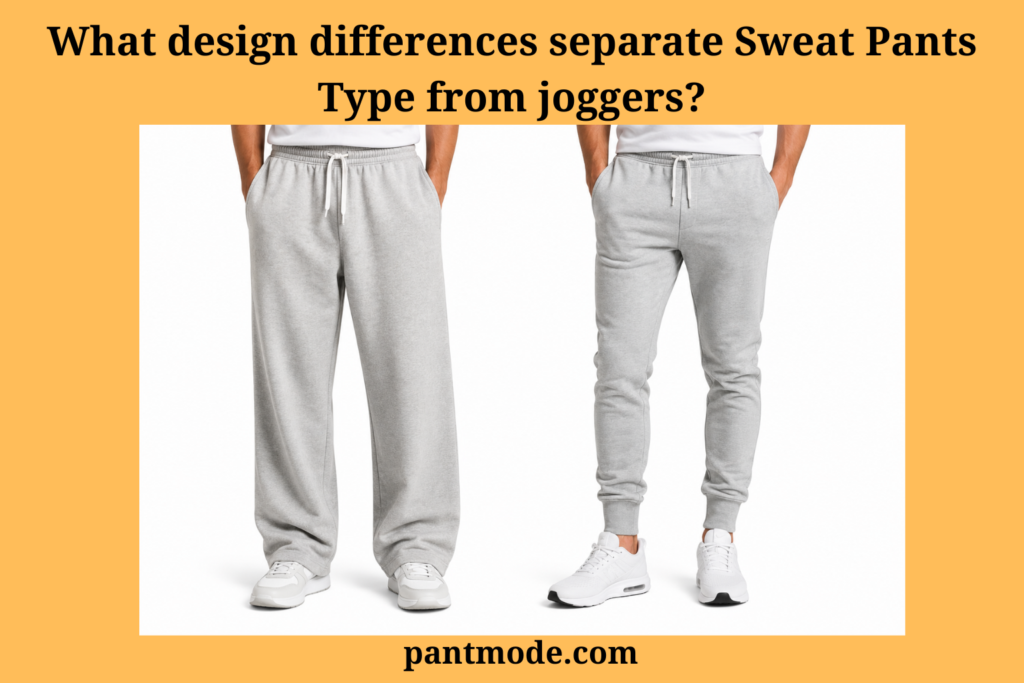
Sweatpants are soft, comfort-first pants usually built with relaxed volume and warmer materials. Joggers are tapered active-casual pants usually built with structured cuffs, cleaner leg shape, and movement-oriented construction. Some modern designs overlap, so visible design details matter more than product names.
Figure: sweatpants and joggers separate through visible design cues rather than product names alone.
What Are the Main Design Differences Between Sweatpants and Joggers?
The main design differences between sweatpants and joggers are that sweatpants usually prioritize relaxed warmth and comfort, while joggers usually prioritize taper, movement, ankle control, and cleaner casual styling.
Rule: sweatpants should be read as relaxed comfort pants first. Reason: wider cuts, softer volume, and heavier fabrics usually support insulation, ease, and low-movement comfort. Example: a loose fleece sweatpant with an open hem works well for lounging but may look too bulky for active errands.
Rule: joggers should be read as tapered active-casual pants first. Reason: narrower legs, cuffed ankles, and movement-oriented construction reduce excess fabric and make footwear more visible. Example: a tapered jogger with a firm ribbed cuff can look cleaner with sneakers than a loose open-hem sweatpant.
Boundary note: modern hybrid designs may blur the distinction, so visible design features matter more than the product label.
Sweatpants vs. Joggers Visual Identification Table
| Identification Feature | Sweatpants Signal | Joggers Signal | Why It Matters |
|---|---|---|---|
| Core purpose | Warmth, softness, lounging | Movement, taper, active-casual styling | Shows intended use |
| Leg shape | Relaxed, straight, or loose | Tapered toward ankle | Changes silhouette |
| Fabric feel | Softer and heavier | Lighter, stretchier, or more technical | Changes comfort and mobility |
| Ankle finish | Open hem, loose elastic, or soft cuff | Structured cuff | Changes shoe interaction |
| Styling direction | Casual and lounge-focused | Athleisure or smart casual | Changes outfit range |
How Do Silhouette Differences Between Sweatpants and Joggers Change the Way They Fit?
Silhouette differences between sweatpants and joggers change fit by controlling leg width, rise, ankle shape, drape, and how much fabric moves around the body.
Leg shape is the first visual cue. Sweatpants usually look straight, loose, or relaxed, while joggers taper from the thigh or knee toward the ankle. The practical result is that sweatpants create more volume, while joggers create a cleaner line.
Ankle finish changes footwear balance. Sweatpants may use an open hem, loose elastic, or a soft gathered cuff, while joggers usually use a structured cuff that frames the ankle and shoe.
Rise and crotch volume affect comfort and movement. Sweatpants often give more relaxed rise and seat volume, while joggers usually use a more controlled rise for mobility and cleaner activewear shape.
Drape changes the styling range. Sweatpants look softer and fuller, while joggers look more streamlined and intentional. Extreme tightness makes both categories look worse, so taper should not be treated as automatically better.
Silhouette and Fit Comparison Matrix
| Fit Feature | Sweatpants Shape | Joggers Shape | Practical Result |
|---|---|---|---|
| Leg shape | Straight, loose, or relaxed | Tapered from thigh or knee toward ankle | Changes the visual line |
| Ankle finish | Open hem, loose elastic, or soft gathered cuff | Structured cuff frames ankle and shoe | Changes footwear balance |
| Rise and crotch | Relaxed rise with extra seat volume | Controlled rise for movement | Changes comfort and mobility |
| Drape | Softer, fuller, lounge-oriented | Streamlined, active, intentional | Changes styling range |
| Calf area | More relaxed or open | Narrower and more controlled | Changes movement and shoe visibility |
Why Do Fabrics Differ Between Traditional Sweatpants and Athletic Joggers?
Fabrics differ between sweatpants history and athletic joggers because sweatpants usually prioritize warmth and softness, while joggers usually prioritize movement, airflow, stretch, and shape recovery.
fabric properties: heavier sweatpant fabrics support warmth and softness. Functional reason: fleece, brushed cotton, and heavier French terry trap more warmth and feel comfortable during low-movement use. Example: heavy cotton fleece works well for winter lounging but can overheat during active errands.
Fabric rule: jogger fabrics often support movement and recovery. Functional reason: nylon, polyester blends, elastane, stretch twill, and moisture-wicking synthetics can reduce bulk and improve shape control. Example: a nylon-elastane jogger can move better during travel than a thick fleece sweatpant.
Fabric weight changes when each garment works best. Sweatpants usually suit warmth, recovery, and indoor comfort, while joggers usually suit movement, errands, and active-casual styling.
Fabric and construction also matter across other casual pants, especially when comparing activewear to fabric construction in chinos and khakis.
Boundary note: not all jogger fabrics are breathable, and not all sweatpants use fleece. Technical materials are useful only when the finish, weight, and fit match the setting.
Fabric and Material Performance Table
| Fabric Category | Common Pant Type | Main Benefit | Best Use | Boundary |
|---|---|---|---|---|
| Heavy cotton fleece | Traditional sweatpants | Warmth and softness | Winter lounging, recovery, indoor comfort | Can overheat during activity |
| Brushed cotton | Sweatpants | Soft hand feel | Relaxed home wear | Can sag or pill over time |
| French terry | Sweatpants or lightweight joggers | Comfort with lighter structure | Transitional weather | Less insulating than fleece |
| Nylon / polyester blend | Athletic joggers | Movement and quick drying | Errands, travel, light activity | Can look shiny if finish is wrong |
| Elastane blend | Joggers | Stretch and shape recovery | Movement-heavy days | Too much stretch can look clingy |
| Stretch twill | Joggers or hybrid casual pants | Cleaner shape with mobility | Smart casual activewear | Needs proper taper and hem |
How Do Cuffs, Waistbands, Pockets, and Seams Reveal Construction Differences Between Joggers and Sweatpants?
Cuffs, waistbands, pockets, and seams reveal jogger construction between joggers and sweatpants because these components show whether the pant is built for lounging, movement, security, or cleaner public styling.
Ankle cuffs reveal the strongest construction signal. Sweatpants often use a loose cuff, open hem, or soft elastic finish, while joggers usually use a firm ribbed cuff or structured ankle closure.
Waistbands change both comfort and public styling. Sweatpants often use soft gathered elastic or hidden drawstrings, while joggers may use cleaner waistbands, exposed drawcords, or flat-front activewear construction.
Pockets change activity usefulness. Sweatpants usually use simple side pockets with minimal security, while joggers often use zippered, hidden, or tech-style pockets for travel and movement.
Seams and panels show whether the pant supports motion. Sweatpants often use basic seam construction, while joggers may include articulated knees, gussets, or stretch panels. This differs from more traditional casual trouser structures such as chino structure.
Boundary note: some hybrid designs combine details from both categories, so do not identify the pant type from one component alone.
Construction Component Comparison Matrix
| Component | Sweatpants Signal | Joggers Signal | Practical Meaning |
|---|---|---|---|
| Ankle cuff | Loose cuff, open hem, or soft elastic finish | Firm ribbed cuff or structured ankle closure | Controls ankle shape and shoe visibility |
| Waistband | Soft gathered elastic or hidden drawstring | Cleaner waistband, exposed drawcord, or flat-front activewear construction | Changes comfort and public styling |
| Pockets | Simple side pockets with minimal security | Zippered, hidden, or tech-style pockets | Changes travel and activity usefulness |
| Seams | Basic seam construction | Articulated knees, gussets, or performance panels may appear | Changes movement support |
| Panels | Usually minimal | May use mobility or stretch panels | Changes active function |
Which Should You Choose Between Sweatpants and Joggers for Different Activities?
You should choose between sweatpants and joggers by matching the pant’s warmth, movement, fabric weight, ankle finish, and styling range to the activity.
Winter lounging or recovery: choose heavyweight sweatpants. The result is maximum warmth and comfort, but the fabric may feel too bulky outside or during movement-heavy settings.
Running errands or coffee casual: choose clean tapered joggers. The result is more intentional athleisure styling, but shiny finishes and overly sporty details can reduce polish.
Gym commute or light activity: choose joggers. The result is better mobility and less fabric bulk, but not every jogger is workout-ready.
Sneaker-focused outfits: choose cuffed joggers. The result is better footwear visibility, but the cuff must sit cleanly without bunching over the shoe.
Joggers may look cleaner than sweatpants in some polished casual settings, but they still sit below sharper alternatives on the chino formality.
Boundary note: activity, weather, and setting matter more than the product label. Neither pant type is always the best choice.
Activity Decision Matrix
| Scenario | Choose | Result | Boundary |
|---|---|---|---|
| Winter lounging or recovery | Heavyweight sweatpants | Maximum warmth and comfort | May be too bulky outside |
| Running errands or coffee casual | Clean tapered joggers | More intentional athleisure styling | Avoid shiny or overly sporty details |
| Gym commute or light activity | Performance joggers | Better mobility and less fabric bulk | Not all joggers are workout-ready |
| Movie night or relaxed home wear | Soft fleece sweatpants | More relaxed comfort | Less polished in public settings |
| Sneaker-focused outfit | Cuffed joggers | Footwear stays visible and balanced | Cuff must not bunch over the shoe |
| Warm weather casual movement | Lightweight joggers | Better airflow and movement | Avoid clingy technical fabric |
How Should You Style Sweatpants and Joggers Without Making the Outfit Look Sloppy?
You should style sweatpants and joggers without looking sloppy by matching each pant’s silhouette to the right upper layers, footwear, and formality level.
Sweatpants styling works best when volume is balanced with intentional casual pieces. Clean hoodies, structured overshirts, substantial sneakers, and relaxed outerwear can make sweatpants look deliberate rather than careless.
Heavy fleece sweatpants should not be forced into fashion context. Dress shirts and blazers usually clash with bulky fleece because the pant’s design language remains soft, relaxed, and lounge-oriented.
jogger styling works best when the tapered silhouette creates clean athleisure lines. Fitted tees, bomber jackets, minimalist sneakers, and low-profile footwear support the cuffed ankle and streamlined shape.
For sweatpants fashion evolution, use the same control principles explained in versatile sweatpants: structured layers, clean footwear, neutral color, and minimal branding.
Boundary note: styling should support the pant’s design instead of fighting it. Jogger cuffs should frame the shoe without awkward bunching.
Sweatpants and Joggers Styling Blocks
| Pant Type | Styling Rule | Example | Boundary |
|---|---|---|---|
| Sweatpants | Balance volume with intentional casual pieces | Relaxed sweatpants with a clean hoodie, structured overshirt, and substantial sneakers | Avoid forcing heavy fleece into high-formality outfits |
| Sweatpants | Keep casual layers coherent | Heavy fleece sweatpants with casual layers | Dress shirts or blazers usually clash with bulky fleece |
| Joggers | Use the tapered silhouette to create clean athleisure lines | Joggers with a fitted tee, bomber jacket, and minimalist sneakers | Avoid overly tight fits |
| Joggers | Let the cuff frame the shoe | Low-profile sneakers or trainers | Bulky boots can fight most jogger cuffs |
Figure: styling works when silhouette, layers, footwear, formality, and fit align.
How Do You Fix Common Fit Mistakes Between Sweatpants and Joggers?
You fix common fit mistakes between sweatpants and joggers by identifying whether the problem comes from tightness, excess length, pocket tension, cuff behavior, or fabric mismatch. For a sharper fit contrast, review dress pants fit.
Mistake: joggers look like leggings. Cause: calves and thighs are too tight. Fix: size up or choose a straight-taper jogger. Result: the pant keeps athletic shape without restriction.
Mistake: sweatpants drag on the floor. Cause: inseam is too long or the hem is too loose. Fix: choose a shorter inseam or hem them. Result: the shoe break becomes cleaner.
Mistake: pocket bags bulge at the hips. Cause: waist or hip area is too tight. Fix: size up and use the drawstring for waist control. Result: the hip line looks smoother.
Boundary note: some fit issues require a different cut, not only sizing up or down. Not every fit problem is a simple size issue.
Athleisure Fit Troubleshooting Checklist
| Mistake | Cause | Fix | Result |
|---|---|---|---|
| Joggers look like leggings | Calves and thighs are too tight | Size up or choose a straight-taper jogger | Athletic shape without restriction |
| Sweatpants drag on the floor | Inseam is too long or hem is too loose | Choose a shorter inseam or hem them | Cleaner break at the shoe |
| Pocket bags bulge at the hips | Waist or hip area is too tight | Size up and use the drawstring for waist control | Smoother hip line |
| Jogger cuffs bunch awkwardly over shoes | Cuff is too loose or leg length is wrong | Choose a better inseam or stronger cuff | Cleaner ankle shape |
| Sweatpants look shapeless | Too much volume or fabric collapse | Choose a cleaner leg shape or denser fabric | More intentional silhouette |
What Final Checklist Confirms the Design Differences Between Sweatpants and Joggers?
The final checklist that confirms the design differences between sweatpants and joggers should verify leg shape, ankle finish, fabric, pockets, and use case before buying or styling.
Check leg shape: straight or loose usually means sweatpants, while tapered usually means joggers. Decision: choose based on the silhouette you want.
Check ankle finish: open hems or soft elastic usually signal sweatpants, while firm cuffs usually signal joggers. Decision: choose based on footwear visibility.
Check fabric: heavy fleece usually favors sweatpants, while lighter stretch fabric usually favors joggers. Decision: choose based on weather and movement needs.
Check use case: lounging and warmth favor sweatpants, while movement and streetwear styling favor joggers. Decision: buy the pant that matches real daily use.
Boundary note: hybrid pants may combine sweatpant and jogger features, so the final decision should come from multiple visible details, not one feature alone.
Final Design Identification Checklist
| Check | Identify | Decision |
|---|---|---|
| Leg shape | Straight or loose usually means sweatpants; tapered usually means joggers | Choose based on desired silhouette |
| Ankle finish | Open hem or soft elastic usually means sweatpants; firm cuff usually means joggers | Choose based on footwear visibility |
| Fabric | Heavy fleece usually means sweatpants; lighter stretch fabric usually means joggers | Choose based on weather and movement |
| Pockets | Simple pockets usually mean sweatpants; secure or zippered pockets often mean joggers | Choose based on activity needs |
| Use case | Lounging and warmth favor sweatpants; movement and streetwear styling favor joggers | Buy the pant that matches real daily use |
| Waistband | Soft gathered waist often signals sweatpants; flatter active waistband often signals joggers | Choose based on comfort and public styling |
Key Takeaway
Choose sweatpants when warmth, softness, and relaxed comfort matter most. Choose joggers when taper, movement, ankle control, sneaker visibility, and cleaner casual styling matter more. The right choice depends on fabric, silhouette, cuffs, waistband, pockets, activity, weather, and setting.
Frequently Asked Questions
Sweatpants usually prioritize warmth, softness, and relaxed comfort, while joggers usually prioritize taper, movement, ankle control, and cleaner active-casual styling.
Joggers and sweatpants overlap in comfortwear, but they are not always the same. Joggers usually have a tapered leg and structured cuff, while sweatpants usually have a looser or more relaxed shape.
Joggers are usually identified by a tapered leg, structured ankle cuff, cleaner waistband, secure pockets, and movement-oriented fabric or construction.
Choose sweatpants when warmth, softness, relaxed volume, lounging, recovery, or cold-weather comfort matters more than taper and active movement.
A cuff alone does not automatically make a pant a jogger. The full design should be checked, including leg taper, fabric, waistband, pockets, seams, and intended use.
Conclusion
Sweatpants and joggers differ because sweatpants usually emphasize comfort and warmth, while joggers usually emphasize taper, movement, ankle control, and cleaner casual styling.
Sweatpants are better for relaxed comfort, cold lounging, recovery, and soft casual outfits. Joggers are better for movement, errands, sneaker-focused outfits, and active-casual styling.
Fabric, fit, cuff structure, waistband design, pockets, and activity should guide the choice more than the product name.
Choose the pant whose design matches your real setting, not just the label on the tag.