
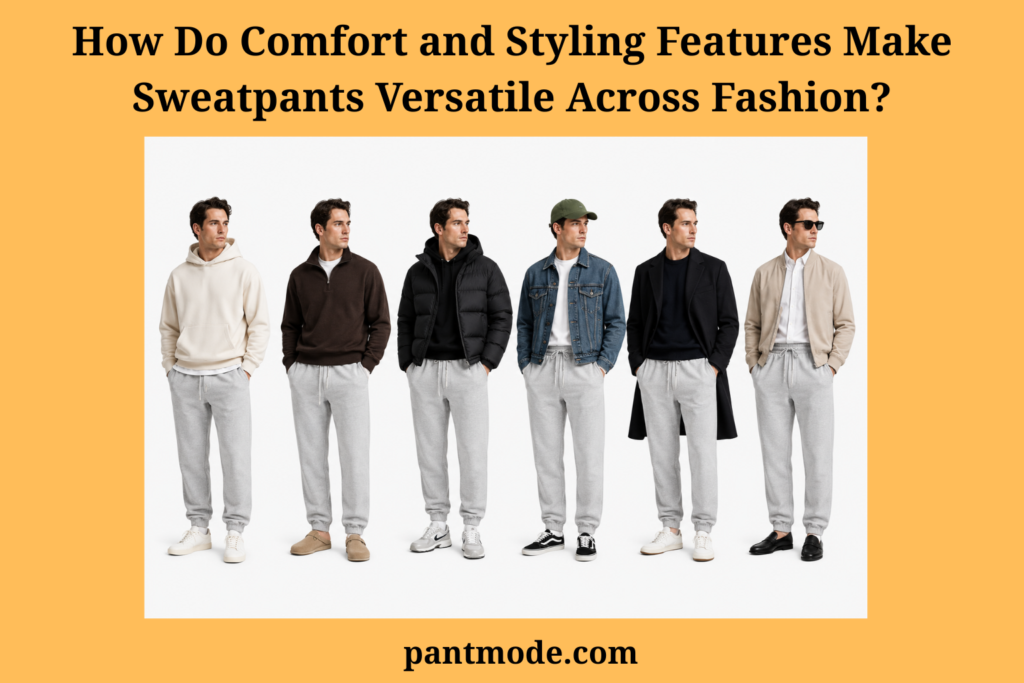
How Do Comfort and Styling Features Make Sweatpants Versatile Across Fashion?
Versatile sweatpants work across modern fashion because comfort-first design becomes more polished when fabric quality, fit, color, and styling are deliberately controlled.
Versatile sweatpants are not basic loungewear because they require refined fabric, controlled fit, and intentional styling. This guide explains fashion context, definition criteria, occasion matching, styling methods, mistakes, maintenance, and final checks while placing sweatpants inside core pant types.
Quick Answer: How Do Comfort and Styling Features Make Sweatpants Versatile Across Fashion?
Sweatpants become versatile when comfort is balanced with refined fit, premium fabric, neutral color, minimal branding, clean footwear, and structured styling. Basic sweatpants remain loungewear, but elevated sweatpants can work across casual, travel, creative office, and relaxed social settings when they look intentional.
Definition: Versatile Sweatpants
Versatile sweatpants are comfort-first trousers designed to work beyond home and gym settings. They use cleaner fabric, controlled fit, neutral colors, minimal details, and intentional styling so they can appear polished in casual, travel, creative, and relaxed social environments.
Figure: versatile sweatpants need fabric, fit, color, footwear, and layering control to move beyond basic loungewear.
Style note: For a closely related tapered silhouette, compare joggers style.
Why Are Versatile Sweatpants Changing the Rules of Modern Fashion?
Versatile sweatpants are changing modern fashion because their fashion evolution has made movement, softness, and all-day wearability more important in everyday outfits.
Consumers now prioritize comfort, movement, and all-day wearability. Understanding sweatpants history explains how the garment moved from athletic and home use into refined comfort-first fashion.
Rigid formalwear is less dominant in everyday dressing, so people want relaxed clothing that still looks intentional. Elevated sweatpants can bridge leisurewear and polished casual fashion, but they do not replace formal trousers or strict dress-code clothing.
Premium fabrics, tapered cuts, matte finishes, and minimal branding have upgraded the category. Tailored sweatpants and refined joggers can support sophisticated outfits, but visible athletic details reduce versatility.
Comfort-First Fashion Shift Table
| Cause | Shift | Fashion Impact | Boundary |
|---|---|---|---|
| Consumers prioritize comfort, movement, and all-day wearability | Sweatpants evolved from home-only garments into refined comfort-first trousers | Versatile sweatpants can work in casual, creative, travel, and relaxed social settings | Only when fabric, fit, and styling are controlled |
| Rigid formalwear is less dominant in everyday dressing | People want relaxed clothing that still looks intentional | Elevated sweatpants bridge leisurewear and polished casual fashion | They do not replace formal trousers |
| Premium brands upgraded fabrics and silhouettes | Tapered cuts, matte finishes, and minimal branding look more refined | Tailored sweatpants and refined joggers can support sophisticated outfits | Visible athletic details reduce versatility |
Sweatpants can sit below chinos and dress trousers on the formality ladder, so the chino formality scale is a useful comparison when judging how far comfortwear can realistically move toward polished casual dressing.
Boundary note: Sweatpants are more acceptable only when fabric, fit, and styling are controlled. They should not be treated as formalwear.
What Criteria Define Versatile Sweatpants Compared to Basic Loungewear?
Versatile sweatpants differ from basic loungewear through fabric quality, refined fit, controlled details, and a neutral color palette.
Understanding Fabric properties helps explain whether sweatpants will hold shape in public. Dense cotton fleece, ponte knit, merino blends, cashmere blends, and matte technical knits usually look more refined than thin fleece that pills, sags, or loses knee shape.
Refined fit separates tailored sweatpants from sofa-only loungewear. A tapered or slim-straight silhouette looks intentional, while oversized length, collapsed knees, or shapeless volume can look careless. The sweatpants–joggers comparison helps clarify when taper, cuffs, and athletic details shift the garment toward jogger styling.
Controlled details increase versatility. Hidden drawstrings, tonal stitching, minimal pockets, clean hems, and low-logo design make sweatpants easier to style across public settings.
Neutral colors make sweatpants easier to elevate. Black, charcoal, navy, oatmeal, taupe, olive, and deep brown usually style more cleanly than bright athletic colors or high-contrast graphics.
Fabric Comparison Table
| Fabric Type | Comfort Level | Structure Level | Best Setting | Versatility Risk |
|---|---|---|---|---|
| Basic cotton fleece | High | Medium | Casual daywear | Can look too relaxed |
| Heavyweight fleece | High | High | Streetwear / travel | May look bulky |
| Ponte knit | Medium-high | High | Smart casual | Needs clean styling |
| Merino blend | High | High | Refined casual | Requires careful washing |
| Cashmere blend | Very high | Medium-high | Elevated social wear | Can look delicate |
| Matte technical knit | High | High | Creative office / travel | Avoid shiny finishes |
Compared with more structured casual trousers such as chino structure, versatile sweatpants need stronger styling control because their softness can quickly read as homewear.
Boundary note: Comfort alone does not make sweatpants versatile. The fabric must hold shape, the fit must look intentional, and the details must avoid obvious gymwear signals.
How Do You Match Versatile Sweatpants to Casual, Office-Adjacent, and Social Occasions?
You match versatile sweatpants to different occasions by choosing the fabric, fit, color, and styling anchor that match the setting’s expected polish.
Casual coffee: choose relaxed tapered sweatpants in cotton fleece or midweight fabric. The result is easy daywear, but stretched knees, loud logos, or pajama-like styling reduce polish.
Creative office: choose slim-straight tailored sweatpants or ponte-knit comfort-first trousers in black, charcoal, or navy. The result is office-adjacent polish, but this does not apply to strict formal offices.
Travel: choose relaxed tapered sweatpants in technical knit with stretch, softness, wrinkle resistance, and shape retention. The result is comfort that still looks controlled, but shiny fabric can make the pant look athletic.
Evening social: choose darker elevated sweatpants in cashmere blend or dense knit with sleek footwear. The result is relaxed polish, but the outfit needs structured styling to avoid looking underdressed.
Versatility Matrix
| Setting | Best Fit | Best Fabric | Best Color | Styling Anchor | Boundary |
|---|---|---|---|---|---|
| Casual coffee | Relaxed tapered | Cotton fleece | Grey, navy, oatmeal | Clean sneakers | Avoid stretched knees or loud logos |
| Creative office | Slim-straight | Ponte or merino blend | Black, charcoal, navy | Overshirt or blazer | Not for strict formal offices |
| Travel | Relaxed tapered | Technical knit | Black, olive, taupe | Minimal jacket | Avoid shiny fabric |
| Evening social | Slim tapered | Cashmere blend or dense knit | Black, charcoal, brown | Chelsea boots or loafers | Keep styling structured |
| Weekend errands | Controlled relaxed | Heavyweight fleece | Olive, grey, navy | Clean outerwear | Avoid pajama-like styling |
Office-adjacent sweatpants should be judged carefully against stricter categories such as khakis as formal attire, because relaxed pants can look polished without becoming formal.
Boundary note: Office-adjacent does not mean formal or strict corporate. Sweatpants remain comfort-first trousers, not business formal dress pants.
How Can You Style Tailored Sweatpants for a Polished, Professional Look?
You can style tailored sweatpants for a polished look by adding structure above the waist, upgrading footwear, controlling color, and minimizing athletic details.
Rule: add structure above the waist. Reason: structured outerwear balances the softness of sweatpants. Example: a clean overshirt, chore jacket, wool coat, or soft blazer can make elevated sweatpants look intentional. Boundary: the result should look polished casual, not disguised as formalwear.
Rule: upgrade footwear. Reason: footwear often decides whether sweatpants read as gymwear or fashionwear. Example: leather sneakers, loafers, Chelsea boots, or suede slip-ons can elevate the look. Boundary: dirty or overly sporty sneakers reduce polish.
Rule: control color. Reason: neutral palettes make sweatpants feel closer to refined casual trousers. Example: black sweatpants with a charcoal overshirt and clean sneakers looks more deliberate than bright fleece with loud graphics. Boundary: very pale shades may show stains or wear faster.
Rule: minimize athletic details. Reason: visible drawstrings, contrast logos, bulky cuffs, and sporty pockets pull sweatpants back toward gymwear. Example: hidden drawstrings and tonal stitching keep the silhouette jogger styling. Boundary: relaxed styling is fine when it matches the setting.
Elevation Checklist
| Styling Check | Yes/No |
|---|---|
| Is the top more structured than the sweatpants? | |
| Are the shoes clean, minimal, and intentional? | |
| Are the colors neutral or coordinated? | |
| Are logos and athletic details minimized? | |
| Does the outfit look balanced from top to bottom? | |
| Would the outfit still look acceptable without a hoodie? | |
| Are drawstrings hidden, tonal, or neatly controlled? | |
| Does the outfit match the setting rather than only comfort needs? |
Fit and silhouette still matter because tailored sweatpants need the same visual discipline that separates refined trousers from sloppy pants. For a stricter comparison, use dress pants fit as the more formal reference point.
Boundary note: Tailored sweatpants should look intentionally styled, not disguised as formalwear. The goal is polished casual style.
Figure: tailored sweatpants look polished when structure, footwear, palette, details, and setting work together.
Which Styling Mistakes Make Elevated Sweatpants Look Too Casual?
Elevated sweatpants look too casual when athletic footwear, visible drawstrings, baggy proportions, worn fabric, bright colors, or loud branding dominate the outfit.
Styling Mistakes vs. Fixes Table
| Error | Cause | Fix | Outcome |
|---|---|---|---|
| Outfit looks like gymwear | Athletic sneakers, performance hoodies, visible drawstrings, and sporty logos dominate | Replace one athletic element with a structured layer or cleaner shoe | Sweatpants feel intentional rather than workout-based |
| Silhouette looks sloppy | Sweatpants are too baggy, too long, or stretched at the knees | Choose a tapered or slim-straight fit with enough structure | Outfit looks relaxed but controlled |
| Fabric looks worn out | Pilling, fading, sagging, or thin fleece reduces refinement | Use a fabric shaver, wash gently, and retire sweatpants that no longer hold structure | Garment remains polished enough for public settings |
| Color feels too athletic | Bright colors, contrast stripes, and loud branding push the look toward sportswear | Choose black, charcoal, navy, taupe, oatmeal, olive, or deep brown | Sweatpants become easier to style across settings |
| Outfit looks underdressed | Top, shoes, and outerwear are too casual at the same time | Add one structured element such as a jacket, overshirt, or leather shoe | Outfit gains intentional polish |
How Do You Keep Versatile Sweatpants Polished, Wearable, and Event-Ready?
You keep versatile sweatpants polished and event-ready by protecting fabric structure, reducing pilling, preserving shape recovery, and checking garment condition before styling.
Event-Ready Maintenance Checklist
| Maintenance Check | Yes/No |
|---|---|
| Is the fabric free from visible pilling? | |
| Do the knees still hold shape? | |
| Is the waistband firm without sagging? | |
| Are the cuffs clean and not stretched out? | |
| Is the color still rich and unfaded? | |
| Are drawstrings hidden or neatly tied? | |
| Does the fabric look matte rather than shiny or worn? | |
| Can the sweatpants pair with structured shoes and outerwear? | |
| Does the garment still look appropriate outside the home? | |
| Does the condition match the event or setting? |
Fabric construction and care behavior matter across casual trouser categories, and the same principle appears in broader fabric construction differences.
Boundary note: Care labels override general maintenance rules, and maintenance cannot fully restore sweatpants that have lost structure, elasticity, color, or knee shape.
Key Takeaway
Versatile sweatpants depend on control. Choose structured fabric, refined fit, neutral colors, minimal branding, clean footwear, and balanced layers. Avoid shiny fabrics, stretched knees, loud logos, bulky cuffs, athletic sneakers, and visible gym details when the goal is polished casual style.
Frequently Asked Questions
Sweatpants become versatile when they use structured fabric, refined fit, neutral colors, minimal branding, clean hems, intentional footwear, and styling that matches the setting.
Yes, sweatpants can look polished when they are made from dense or structured fabric, cut with a controlled silhouette, styled with clean footwear, and paired with structured layers.
Versatile sweatpants may work in creative or relaxed office-adjacent settings, but they are not suitable for strict formal, corporate, or dress-code-heavy offices.
Sweatpants look sloppy when they are too baggy, too long, faded, pilled, stretched at the knees, loud in branding, or styled with too many athletic details.
Keep sweatpants polished by washing gently, avoiding high heat, removing pilling, folding them properly, checking cuffs and knees, and wearing them only when the fabric still holds shape.
Conclusion
Versatile sweatpants succeed when comfort, structure, styling, and maintenance work together to create intentional casual polish.
Sweatpants become versatile only when fabric, fit, color, and styling are controlled. Dense fabric, refined silhouette, neutral colors, minimal branding, and clean footwear make the garment look intentional rather than home-only.
Elevated sweatpants work best in casual, travel, creative, and relaxed social settings. Office-adjacent or social wear requires clean footwear, structured layers, minimal branding, and maintained fabric.
Treat versatile sweatpants as comfort-first trousers that must earn polish through design and styling.