
How Are Core Pant Types Classified by Function and Occasion Use?
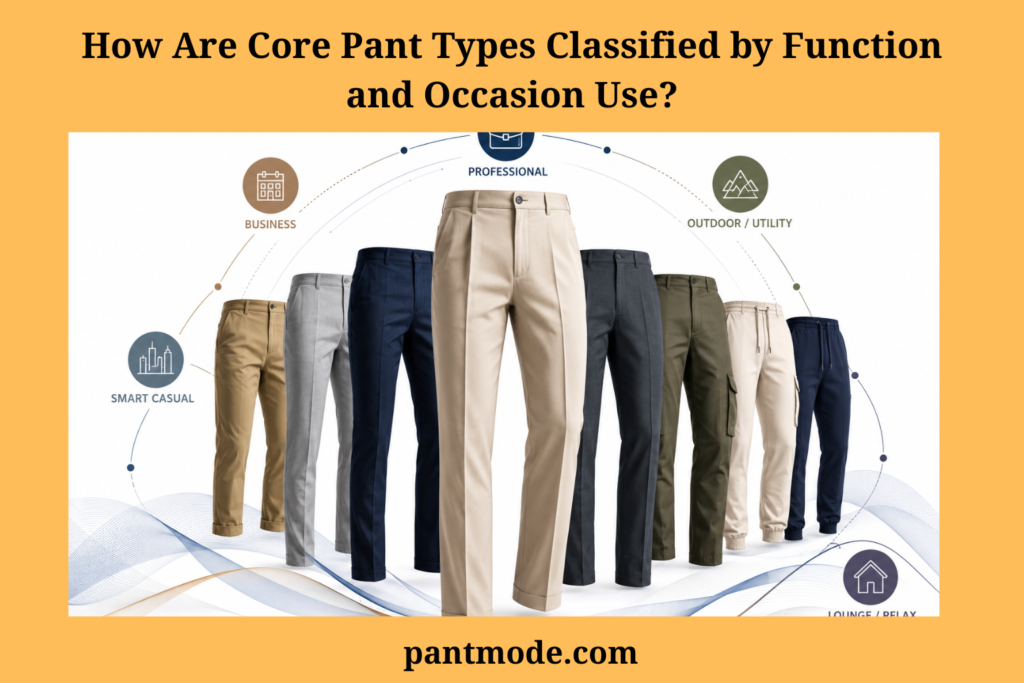
Core pant types are classified by function and occasion use by matching each pant’s fabric, structure, fit, and wardrobe role to the setting where it performs best.
This article covers classification, fabric and structure, fit and silhouette, professional use, casual and utility use, wardrobe building, mistakes, and a final checklist.
Quick Answer
Core pant types are classified by function and occasion use when their fabric, structure, fit, and wardrobe role match a specific setting. Dress trousers typically serve formal or professional use, chinos and khakis often serve smart-casual use, jeans serve casual durability, and joggers or performance pants serve comfort-focused movement.
Figure: function + occasion classification helps classify core pant types without turning the page into a product guide.
Why is understanding core pant types essential for building a functional wardrobe?
Understanding core pant types is essential for building a functional wardrobe because each pant category fills a different role across work, formal events, casual days, travel, utility, and lounge settings.
Buying pants only because they are trending can create a wardrobe that looks active but lacks practical coverage. The result is a closet with many options, but no reliable pair for a specific workday, formal event, weekend, travel day, or utility need.
The solution is to classify foundational pants by function, fabric, fit, and occasion so each pair fills a clear wardrobe role.
This article stays narrower than the full guide where all pant types are classified across the wider PantMode taxonomy.
What classification framework separates core pant types by function and occasion use?
The classification framework for core pant types separates pants by function, occasion use, fabric, and fit so each category has a clear wardrobe role.
Definition
Core pant types are foundational wardrobe pants grouped by how they function, where they are worn, how their fabric behaves, and how their fit shapes formality, movement, and styling use.
Function means what the pant is built to do, such as formal wear, casual wear, utility, travel, or athletic movement. Occasion use means where the pant is appropriate, such as business casual, formal, weekend casual, outdoor work, or lounging.
Fabric acts as the material signal that controls drape, durability, breathability, and formality, while fit controls the silhouette that affects body balance, shoe pairing, and visual polish.
The function-based system becomes clearer after readers understand how core types are defined through the broader use-fabric-fit framework.
| Core Pant Type | Primary Function | Common Occasion | Main Fabric | Typical Fit | Formality Level |
|---|---|---|---|---|---|
| Dress trousers | Professional polish | Formal business, interviews, formal dinners | Refined wool or wool-blend fabric | Straight or tailored with clean break | High |
| Tailored chinos | Smart-casual flexibility | Office casual, dinners, social settings | Cotton twill or refined cotton blend | Slim-straight or tapered | Medium |
| Khakis | Casual or workwear-adjacent utility | Daily wear, relaxed office, casual errands | Rugged cotton twill | Straight or relaxed straight | Low to medium |
| Jeans | Casual durability and visual weight | Weekend, casual social settings, smart-casual when clean | Denim | Straight, slim, relaxed, or wider | Low to medium |
| Joggers or performance pants | Comfort-focused movement | Travel, lounge, athletic, active casual | Soft knit or technical fabric | Tapered or relaxed tapered | Low |
What are the primary classifications of core pant types based on fabric and structure?
The primary classifications of core pant types based on fabric and structure separate rugged, refined, casual, utility, and formal pants by their material signal and construction language.
The rule is that fabric and structure strongly influence the category of foundational pants. Rugged fabrics signal casual or utility use, while refined fabrics and cleaner construction signal formality.
Raw denim can support casual durability, cotton twill can support chinos and khakis, and worsted wool can support tailored dress trousers when the garment’s construction matches that role.
Figure: fabric and structure signals helps classify core pant types without turning the page into a product guide.
| Fabric / Structure | Visual Signal | Common Core Pant Match | Common Setting | Styling Risk |
|---|---|---|---|---|
| Refined wool or wool blend | Clean drape and formal polish | Dress trousers | Business, formal events, interviews | Can look overdressed in relaxed settings |
| Cotton twill | Structured but approachable | Chinos or khakis | Smart casual, daily wear, office casual | Can look too casual if faded or wrinkled |
| Denim | Rugged texture and casual weight | Jeans | Weekend, casual social use, some smart-casual settings | Distressing can reduce polish |
| Utility pocket structure | Practical and casual function | Cargos or work pants | Utility, outdoor casual, workwear styling | Details can overpower refined outfits |
| Soft knit or technical fabric | Comfort and movement | Joggers or performance pants | Travel, lounge, athletic use | Can look too informal for professional settings |
How does fit and silhouette shape the classification of core pant types?
Fit and silhouette shape the classification of core pant types by controlling proportion, comfort, footwear balance, visual polish, and the formality of the leg line.
Rise controls waist placement and proportion, while thigh room affects comfort, mobility, and pocket behavior. Taper controls whether the leg line appears clean or relaxed, and leg opening affects shoe balance and visual weight.
Break determines whether pants look clean, classic, heavy, or sloppy over footwear, so it should match the pant type and the shoe shape instead of being treated as one universal rule.
Fit classification should account for proportion because men’s proportions can influence how core pant types sit, balance, and move.
Figure: fit and silhouette control helps classify core pant types without turning the page into a product guide.
| Fit Element | What It Controls | Common Core Pant Match | Common Mistake | Correction |
|---|---|---|---|---|
| Rise | Waist placement and proportion | Dress trousers, chinos, jeans | Choosing rise without considering balance | Use a rise that supports the intended silhouette |
| Thigh room | Mobility, comfort, and pocket behavior | Chinos, jeans, joggers | Too little room causing pull or pocket flare | Choose more room or a better category |
| Taper | Clean or relaxed leg line | Chinos, trousers, joggers | Over-tapering bulky shoes or wider thighs | Match taper to footwear and movement |
| Leg opening | Shoe balance and visual weight | Jeans, chinos, trousers | Opening clashes with shoe size or style | Choose a leg opening that sits cleanly over footwear |
| Break | How fabric rests on shoes | Dress trousers, chinos, jeans | Pooling or excessive stacking | Use a cleaner break for polished settings |
How do you choose the right core pant types for professional occasions?
You choose the right core pant types for professional occasions by prioritizing clean drape, minimal detailing, appropriate fabric, controlled break, and a fit that supports visual polish.
Dress trousers typically suit formal business environments, while tailored chinos often work well in business-casual settings depending on workplace expectations. Refined khakis can work in relaxed professional settings when the fabric, footwear, and top half remain polished.
Professional outfits need cleaner structure because formal features are defined by specific design features.
Figure: occasion appropriateness helps classify core pant types without turning the page into a product guide.
| Occasion | Recommended Core Pant Type | Fabric Signal | Fit Signal | What to Avoid |
|---|---|---|---|---|
| Formal business or interview | Dress trousers | Refined, smooth, structured | Clean break and controlled drape | Distressed denim, cargos, athletic joggers |
| Business casual office | Tailored chinos or refined khakis | Clean cotton twill or refined cotton | Slim-straight or tapered with controlled break | Heavy distressing or lounge fabrics |
| Formal dinner or wedding guest setting | Dress trousers or refined tailored pants | Polished drape and minimal texture | Clean line with appropriate footwear | Utility pockets or overly casual fabric |
| Office-to-dinner setting | Tailored chinos or refined cotton trousers | Smart-casual fabric signal | Balanced taper and clean footwear pairing | Sloppy hems or worn casual texture |
Which core pant types are best suited for casual and utility functions?
Core pant types suited for casual and utility functions are the styles whose fabric, fit, and structure support comfort, durability, movement, and informal visual weight.
Everyday casual outfits often work with denim jeans, five-pocket twill pants, or relaxed chinos because these pant categories carry more texture and ease. Smart-casual settings often work better with dark denim, clean chinos, or refined cotton trousers when the outfit needs both comfort and polish.
Active or utility use may call for cargo pants, technical trousers, workwear pants, or performance joggers, but the category name alone does not prove durability, technical performance, or workplace suitability.
Casual outfits need a different visual language because casual cues differ from formal-trouser signals.
Travel and long days require more comfort awareness because some core pant types prioritize movement allowance, waistband ease, and fabric behavior.
How can you build a versatile wardrobe foundation around core pant types?
You can build a versatile wardrobe foundation around core pant types by prioritizing pants that cover casual, smart-casual, formal, and comfort-focused roles before adding duplicates.
Start with casual coverage through dark straight-leg denim for weekends, errands, and informal settings. Add smart-casual flexibility through neutral chinos in khaki, navy, olive, or stone for office-casual, dinners, and social events.
Prepare for formality with tailored charcoal, navy, or mid-grey dress trousers for business, weddings, interviews, or formal dinners. Add comfort and movement last through clean tapered joggers or technical travel pants for travel, lounge, athletic, or relaxed use.
Smart-casual outfits work better when core pant types create a polished casual appearance through cleaner fabric, fit, shoes, and finishing.
| Wardrobe Role | Essential Core Pant Type | Common Color Direction | Primary Use | Owned? |
|---|---|---|---|---|
| Casual coverage | Dark straight-leg denim | Dark blue or black | Weekend, errands, informal settings | ☐ |
| Smart-casual flexibility | Neutral chinos | Khaki, navy, olive, or stone | Office-casual, dinners, social events | ☐ |
| Formal readiness | Tailored dress trousers | Charcoal, navy, or mid-grey | Business, weddings, interviews, formal dinners | ☐ |
| Comfort and movement | Clean tapered joggers or technical travel pants | Black, navy, grey, or olive | Travel, lounge, athletic, relaxed use | ☐ |
What common styling mistakes should you avoid when wearing different core pant types?
The most common styling mistakes with core pant types happen when formality, fabric, fit, footwear, or occasion use contradict the pant’s intended role.
If athletic joggers are worn to a business-casual dinner, swap them for tailored chinos, refined khakis, or a clean tech-fabric trouser to increase visual formality. If rugged distressed jeans are paired with a formal blazer, switch to dark undistressed denim, tailored chinos, or dress trousers to create better balance.
If pants pool heavily over shoes, diagnose the break and hem interaction instead of assuming the pant type is wrong. A slight break, half break, or no break may work depending on pant type, fabric behavior, and footwear shape.
Figure: styling risk diagnosis helps classify core pant types without turning the page into a product guide.
| Mistake | Why It Fails | Better Core Pant Type | Fit / Fabric Fix | Final Result |
|---|---|---|---|---|
| Athletic joggers at a business-casual dinner | The fabric and silhouette read too relaxed | Tailored chinos, refined khakis, or clean tech-fabric trouser | Use cleaner fabric and sharper taper | More polished casual balance |
| Distressed jeans with a formal blazer | Rugged denim fights the blazer’s formality | Dark undistressed denim, tailored chinos, or dress trousers | Use cleaner fabric and minimal distressing | Better smart-casual alignment |
| Heavy pooling over shoes | Break looks sloppy or unfinished | Same category with cleaner length or break | Adjust hem interaction with footwear | Cleaner vertical line |
| Utility pockets in a refined setting | Detailing shifts the pant into casual utility language | Dress trousers, tailored chinos, or refined khakis | Use minimal detailing | More appropriate formality |
Which final checklist helps you classify and choose core pant types correctly?
The final checklist for choosing core pant types works by testing occasion, fabric, fit, wardrobe role, and styling risk before the pant is added to an outfit or wardrobe.
Ask what the occasion is, then check whether the setting is casual, business casual, formal, travel, utility, or lounge. Choose the foundational pant category that matches that setting.
Check whether the fabric matches the function, whether the fit supports the silhouette, and whether the pant fills a real wardrobe gap instead of duplicating the same use case.
Figure: final classification checklist helps classify core pant types without turning the page into a product guide.
Final Core Pant Classification Checklist
- Question: What is the occasion? Action: Choose the foundational pant category that matches the setting.
- Question: Does the fabric match the function? Action: Select fabric that supports the intended use.
- Question: Does the fit support the silhouette? Action: Adjust fit or tailoring before styling.
- Question: Does the pant fill a real wardrobe gap? Action: Prioritize missing wardrobe roles first.
Frequently Asked Questions
Core pant types are foundational wardrobe pants classified by function, occasion use, fabric, structure, and fit. They include pants that repeatedly serve clear wardrobe roles such as casual, smart-casual, formal, utility, travel, or lounge use.
Occasion and function classify core pant types by identifying where the pant is worn and what job it performs. Formal events typically require cleaner drape and refined structure, while casual or utility settings allow more texture, durability, and relaxed function.
Jeans can be core pant types when they serve a repeatable casual or smart-casual wardrobe role. Dark, clean denim usually works across more settings than distressed, heavily faded, or overly relaxed denim.
Tailored chinos, refined khakis, clean cotton trousers, and dark undistressed denim can work for business-casual settings when the fit, fabric, footwear, and top half support a polished appearance.
Yes. Many core pant types can work across multiple occasions when fabric, fit, footwear, and styling align with the setting.
Conclusion
Core pant types are easier to classify when function, occasion use, fabric, structure, and fit are evaluated together.
The right category is the one whose wardrobe role, material signal, silhouette, break, and styling risk all match the setting where the pant will be worn.