
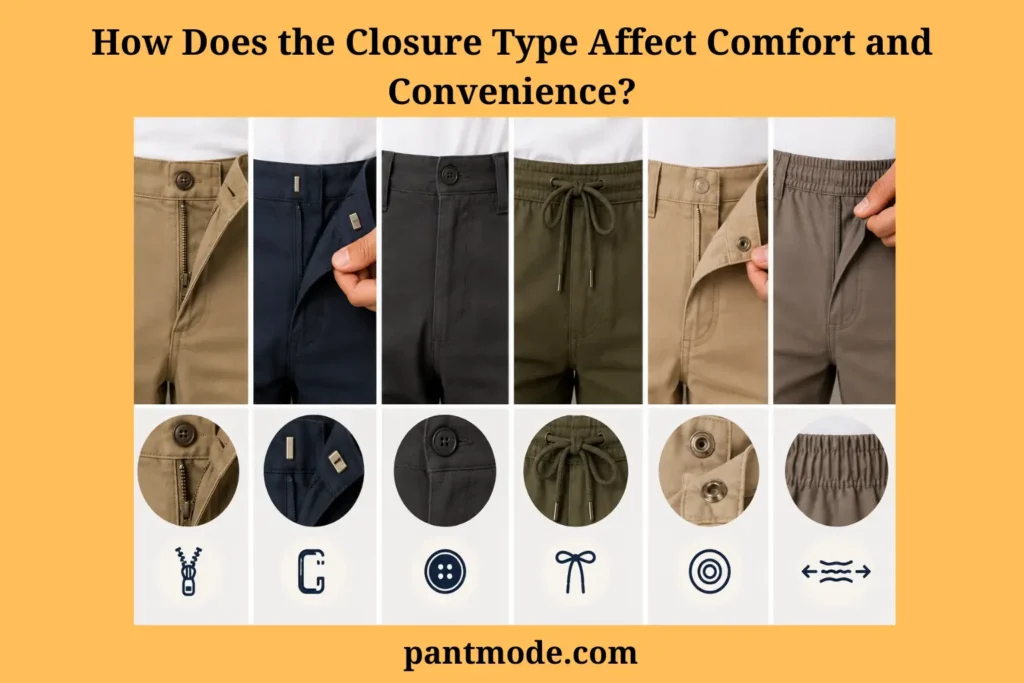
How Does Shoe Closure Type Affect Comfort and Convenience?
Shoe closure type affects comfort and convenience by controlling how the shoe opens, secures, adjusts, releases, and distributes tension across the foot during wear.
Closure systems influence retention, instep tension, pressure distribution, heel movement, entry, removal, and daily usability, but the closure must always be judged with the shoe’s length, width, heel shape, instep volume, toe-box room, upper construction, sock thickness, activity, environment, and maintenance needs.
Quick Answer
Shoe closure type affects comfort and convenience by controlling how the shoe opens, tightens, releases, and holds the foot during wear. Laces offer strong zone-by-zone adjustment, hook-and-loop straps reduce repeated tying, dial systems can allow incremental tension changes, elastic or bungee laces support quick entry, zippers improve access, buckles provide repeatable strap tension, and slip-ons reduce manual effort. The best choice depends on foot shape, activity, dexterity, mobility, maintenance, and overall shoe fit.
Definition
A shoe closure type is the fastening system used to secure the foot inside a shoe. It may include laces, hook-and-loop straps, dials, elastic laces, bungee laces, zippers, buckles, slip-on construction, or assisted-entry mechanisms.
Key Takeaway
Choose a shoe closure type by testing three things: whether it secures the heel without overtightening, whether it avoids concentrated pressure over the instep or hardware points, and whether you can operate and maintain it easily in real daily use.
Source Scope
Frontiers research on a wrapping closure lacing system supports closure and lacing relevance to upper tightness, foot containment, foot–shoe coupling, pressure distribution, in-shoe movement, heel slippage, and a running-specific comparison between a dial-based wrapping system and conventional laces.
Pedorthic Association of Canada guidance on adjustable footwear closures identifies laces, hook-and-loop, buckles, and zippers as adjustable closure examples and discusses customized fit, donning and doffing, sock-thickness variation, foot-volume changes, sensitive spots, and whole-shoe fit factors.
Neither source is used here to claim one closure is universally best, medically corrective, or capable of fixing an incorrectly sized shoe.
Medical-Adjacent Boundary
This article discusses dexterity, reach, mobility, sensitive pressure points, and foot-volume changes only as footwear access and usability considerations. It does not diagnose a condition, prescribe orthopedic treatment, replace professional advice, or transfer orthopaedic footwear framing into general lifestyle footwear guidance.
Closure choice should be judged by retention, pressure, access, adjustment, and daily utility together.
Why Does Shoe Closure Type Matter for Comfort, Fit, and Daily Convenience?
Shoe closure type matters for comfort, fit, and daily convenience because it controls how the upper secures the foot, distributes tension, and allows the wearer to enter, adjust, and remove the shoe.
A closure secures the foot by applying tension through the upper. Depending on the design, that tension may act across the forefoot, instep, ankle, and heel region. Appropriate adjustment can reduce unwanted internal movement while avoiding excessive localized pressure.
Some closures provide zone-by-zone control; others apply broader or more fixed retention. Traditional laces can alter tension across several eyelet zones, while straps, zippers, elastic systems, dials, and slip-on constructions usually trade some form of adjustment precision for speed, simplicity, or different access characteristics.
Entry and removal are part of fit usability. A closure that feels secure but is impractical to operate every day may not suit the wearer’s routine.
The closure cannot be isolated from whole-shoe geometry. Length, width, heel shape, heel counter, instep volume, toe-box room, upper construction, sock thickness, foot-volume changes, and activity can all change whether the same closure feels secure or restrictive.
Closure Function & Fit Table
| Closure Function | What It Controls | Practical Benefit |
|---|---|---|
| Foot retention | Internal movement | More secure feel |
| Instep tension | Upper pressure | Adjustable comfort |
| Heel retention | Rear-foot movement | Reduced unwanted slip |
| Entry and exit | Ease of putting on and removing | Daily convenience |
| Volume adjustment | Fit across changing foot volume | More adaptable wear |
| Activity retention | Movement under load | Better task-specific stability |
A closure fine-tunes a compatible shoe; it should not be used to force an unsuitable length, width, heel, instep, or upper geometry.
How Does Traditional Lace Shoe Closure Type Affect Foot Comfort and Fit Adjustment?
Traditional lace shoe closure type affects foot comfort and fit adjustment by allowing localized tension changes across the forefoot, midfoot, instep, and upper eyelets.
Laces offer extensive zone-by-zone adjustability because each section of the lace path can be tensioned differently. That makes them useful when the wearer needs more precise control rather than one broad closure setting.
High-instep pressure: reduce tension across the affected midfoot zone or test a window-style lacing approach that reduces direct pressure over a sensitive area. No lacing pattern works for every high-volume or pressure-sensitive foot.
Heel movement: upper-eyelet tension can improve retention when the shoe’s heel geometry and size already suit the wearer. Overtightening should not be used to force a loose or mismatched heel shape to fit.
Forefoot pressure: reduce tension through the lower eyelets or create more local lace-path volume. If width remains inadequate, the shoe itself should be reassessed.
Forward sliding: improve midfoot or upper retention while checking shoe length and internal volume. Continued sliding after reasonable adjustment is a whole-shoe-fit warning rather than a signal to keep tightening.
Lacing Adjustment Matrix
| Fit Issue | Closure Zone | First Adjustment | Reassess Shoe Fit If |
|---|---|---|---|
| Instep pressure | Midfoot | Reduce localized tension | Pressure persists |
| Heel slip | Upper eyelets | Increase appropriate retention | Heel still lifts substantially |
| Forefoot pressure | Lower eyelets | Loosen forefoot zone | Width remains inadequate |
| Uneven pressure | Whole lace path | Redistribute tension | One area still requires overtightening |
| Foot slides forward | Midfoot or upper lacing | Improve retention | Sliding continues |
Which Alternative Shoe Closure Type Offers Faster or Easier Adjustment?
Alternative shoe closure type options can offer faster or easier adjustment when their mechanism matches the wearer’s access needs, activity, foot shape, and tolerance for maintenance.
Hook-and-loop straps provide fast broad adjustment with fewer tying steps. Their performance depends on strap placement, strap length, surface engagement, debris exposure, and wear.
Dial closures can provide incremental adjustment and quick release in some systems. The dial, cable, guides, upper, tongue, and shoe geometry work as one system, so a branded mechanism alone is not proof of whole-shoe quality.
Elastic or bungee laces reduce repeated tying and can make entry faster. Their trade-off is less independent zone-by-zone control than conventional laces in many designs, plus the need to monitor elastic recovery over time.
Zipper-assisted closures improve opening and closing speed. A zipper by itself usually offers limited tension adjustment, so fit often depends on another structure such as laces, straps, elastic, or the upper geometry.
Buckles and adjustable straps can provide repeatable tension at defined points. Poor placement or overtension can create localized pressure.
Slip-on construction minimizes fastening steps, but retention depends strongly on shoe geometry, collar design, heel shape, elastic components, and overall fit.
Closure Type Comparison Matrix
| Closure Type | Adjustment Precision | Entry Speed | Fine-Motor Demand | Main Strength | Main Trade-Off |
|---|---|---|---|---|---|
| Laces | High | Slower | Higher | Localized adjustment | Requires tying |
| Hook-and-loop | Moderate | Fast | Lower | Broad quick adjustment | Wear and debris |
| Dial | High or incremental | Fast | Low to moderate | Repeatable tension changes | Mechanical complexity |
| Elastic or bungee | Moderate | Fast | Lower | Quick entry | Less zoning |
| Zipper | Low by itself | Fast | Lower | Rapid access | Limited fine adjustment |
| Buckle or strap | Moderate | Moderate | Varies | Repeatable setting | Local pressure |
| Slip-on | Limited | Very fast | Low | Ease of entry | Strong fit dependence |
Which Shoe Closure Type Works Well for Different Dexterity and Mobility Needs?
The shoe closure type that works well for different dexterity and mobility needs is the one the wearer can open, secure, adjust, and release reliably without sacrificing fit stability.
If tying small laces is impractical, hook-and-loop straps, elastic laces, dial systems, zipper-assisted entry, or an appropriately designed assisted-entry system may reduce fine-motor steps. The important test is whether the wearer can operate the mechanism reliably rather than whether the product is marketed as “easy.”
If bending or reaching the foot is difficult, a wider opening, zipper-assisted entry, elastic entry system, or suitable step-in construction may reduce the amount of reaching required. The shoe must still remain secure once on the foot.
For one-handed use, simple pull, press, dial, strap, or assisted-entry actions can be useful only if tightening and release can both be completed reliably with one hand.
Foot volume can change through the day or with different sock thicknesses. Re-adjustable laces, straps, or dial systems can be useful when they provide enough range without creating pressure elsewhere.
Dexterity, reach, mobility, and volume changes are treated here as access considerations, not as a diagnosis or treatment plan. The easiest closure is not automatically the most appropriate shoe.
Dexterity & Access Decision Matrix
| User Need | Useful Closure Characteristics | Main Check |
|---|---|---|
| Difficult lace tying | Fewer fine-motor steps | Can the mechanism be operated reliably? |
| Limited reach | Wide or easy entry | Does the shoe remain secure? |
| One-handed use | Simple one-hand action | Can it both tighten and release? |
| Variable foot volume | Re-adjustable closure | Is there enough adjustment range? |
| Frequent on and off use | Faster opening system | Does convenience sacrifice fit? |
How Can Shoe Closure Type Help Diagnose Heel Slip, Instep Pressure, and Other Discomfort?
Shoe closure type can help diagnose heel slip, instep pressure, and other discomfort by showing whether the problem improves with tension changes or remains because of shoe geometry.
Heel slip: possible causes include loose upper retention, heel-counter mismatch, heel shape mismatch, excess internal volume, or a shoe that is too large. Adjust the upper closure zone and walk normally. If slip remains after reasonable adjustment, reassess the shoe instead of overtightening.
Instep pressure: excessive localized tension, low upper volume, or an unsuitable lacing path can concentrate pressure. Reduce tension only across the affected zone; persistent pressure may require a shoe with different instep volume or upper geometry.
Zipper, buckle, or strap pinching: folded internal layers, hardware position, overtension, or shoe-volume mismatch can create a pressure point. Flatten layers and reduce tension. Persistent pinching indicates that the closure placement or shoe shape may be unsuitable.
Ankle restriction: upper closure tension or a stiff construction can restrict movement. Reduce tension gradually, but do not leave structural eyelets, buckles, or straps unsecured if doing so creates heel movement or instability.
Forward sliding: weak retention, excess internal volume, or shoe shape mismatch can move the foot forward. If adjustment does not correct the movement without excessive pressure, the whole shoe needs reassessment.
Closure Fit Troubleshooting Matrix
| Problem | Possible Closure or Fit Cause | First Fix | Reassess Shoe If |
|---|---|---|---|
| Heel slip | Loose retention | Adjust upper zone | Slip continues |
| Instep pressure | Excess local tension | Reduce affected zone | Pressure remains |
| Buckle pressure | Localized hardware pressure | Reposition or loosen | Pressure persists |
| Zipper pinching | Fold, volume, or placement issue | Flatten and retest | Pinching remains |
| Ankle restriction | Excess upper tension | Reduce gradually | Stability suffers |
| Forward sliding | Insufficient retention | Adjust closure | Sliding continues |
How Durable and Maintainable Is Each Shoe Closure Type?
Each shoe closure type has different durability and maintenance needs because laces, straps, dials, elastic systems, zippers, buckles, and slip-on components wear in different ways.
Traditional laces: inspect for fraying, eyelet wear, and reduced knot retention. Laces are usually among the simplest closure components to replace.
Hook-and-loop: remove lint, hair, sand, and debris from the fastening surfaces and check whether engagement remains secure as the surfaces wear.
Dial systems: test the dial, cable, guides, tensioning path, and release mechanism. Repairability depends on the individual system and shoe construction.
Elastic or bungee laces: monitor loss of elastic recovery or tension. A quick-entry system becomes less useful if the elastic no longer holds the foot as intended.
Zippers: keep teeth or coil and the slider free from debris, and inspect for misalignment, damaged stops, or slider wear.
Buckles: inspect hinge points, strap holes, attachment points, and corrosion where relevant.
Slip-on elastic: watch for a stretched collar or elastic components that no longer retain the heel. Exact lifespan for any closure depends on construction, materials, environment, use frequency, and maintenance.
Closure Durability & Maintenance Table
| Closure | Main Wear Point | Maintenance Check | Replaceability |
|---|---|---|---|
| Laces | Fraying | Inspect lace and eyelets | Usually easy |
| Hook-and-loop | Surface contamination or wear | Clean fastening surface | Varies |
| Dial | Cable, dial, and guides | Test smooth operation | System-dependent |
| Bungee | Elastic fatigue | Test recovery | Often replaceable |
| Zipper | Slider, teeth, or coil | Clean and inspect | Repair complexity varies |
| Buckle | Hinge or strap attachment | Check security | Varies |
| Slip-on elastic | Stretch loss | Test retention | Often construction-dependent |
What F50 Checks Verify Shoe Closure Type Before Purchase?
F50 checks verify shoe closure type before purchase by turning fit precision, entry access, dexterity, pressure, retention, maintenance, red flags, and whole-shoe fit into a controlled decision path.
Trigger: identify whether the decision is choosing, comparing, adjusting, troubleshooting, maintaining, or rejecting a closure.
Classification: classify the primary need, activity, adjustment precision, manual demand, access need, foot-volume variation, pressure sensitivity, maintenance tolerance, whole-shoe fit, and verification requirement.
Recommendation: choose a closure direction that solves the actual access or fit-control need rather than choosing the newest or most heavily marketed mechanism.
Red flag: stop if the closure is compensating for wrong size, persistent heel slip, instep pressure, zipper pinching, hook-and-loop wear, uneven dial tension, slip-on looseness, impractical operation, medical framing, or technology-over-fit marketing.
Exception: slip-ons, zippers, hook-and-loop, dials, elastic systems, adaptive closures, or deliberately loosened lace zones can all be valid when retention and whole-shoe fit remain stable.
Verification: approve only after entry, adjustment, heel retention, pressure distribution, dexterity, environment, maintenance, source scope, and whole-shoe fit all pass.
F50 Shoe Closure Type Decision-Control Table
| F50 Step | Control Question | Pass Standard |
|---|---|---|
| Trigger | Is the reader choosing, comparing, adjusting, troubleshooting, maintaining, or rejecting a shoe closure type? | Decision situation is clear |
| Classification | What fit, access, activity, dexterity, pressure, volume, and maintenance needs apply? | Closure need is classified before recommendation |
| Recommendation | Which closure direction matches the actual need? | Closure solves a real use problem |
| Red flag | Is the closure compensating for wrong size, causing pressure, slipping, pinching, wearing out, relying on marketing, or drifting into medical framing? | Risk is named before approval |
| Exception | Is a less adjustable, easier-entry, or adaptive closure justified by the user’s real routine? | Exception is clearly justified |
| Verification | Do entry, adjustment, heel retention, pressure, dexterity, environment, maintenance, and whole-shoe fit checks pass? | Shoe is approved only after real tests |
| Source scope | Are Frontiers and Pedorthic Association of Canada used only within evidence limits? | No source is stretched beyond scope |
| URL validation | Are internal links omitted unless approved URLs exist? | No invented URL or self-link |
F50 prevents closure-technology bias by requiring classification, red-flag control, exceptions, and whole-shoe verification.
How Should You Evaluate Shoe Closure Type Before Buying?
You should evaluate shoe closure type before buying by testing entry, adjustment range, heel retention, pressure distribution, dexterity, environment, maintenance, and whole-shoe fit.
Perform the tests with the socks and activity conditions that most closely match real use. A closure should be easy enough to operate, adjustable enough for the wearer’s needs, secure without excessive tension, and maintainable within the expected environment.
Pre-Purchase Fastening Evaluation Checklist
Final Closure Priority Checklist
What Final Rule Should Guide Shoe Closure Type?
The final rule for shoe closure type is to choose the fastening system that you can operate reliably, adjust comfortably, maintain realistically, and wear securely in the activities you actually do.
Judge foot retention, entry and removal, localized adjustment, heel retention, instep tension, pressure distribution, dexterity, mobility, foot-volume variation, activity, environment, maintenance, whole-shoe fit, source scope, and purchase verification together.
No lace, strap, dial, zipper, buckle, elastic lace, slip-on construction, or assisted-entry mechanism is universally best. Closure comfort is proven by real fit testing rather than a category name, brand technology, or medical-adjacent language.
The best shoe closure type is the one that secures your foot, avoids pressure, supports your routine, and remains easy enough to use every time you wear the shoe.