
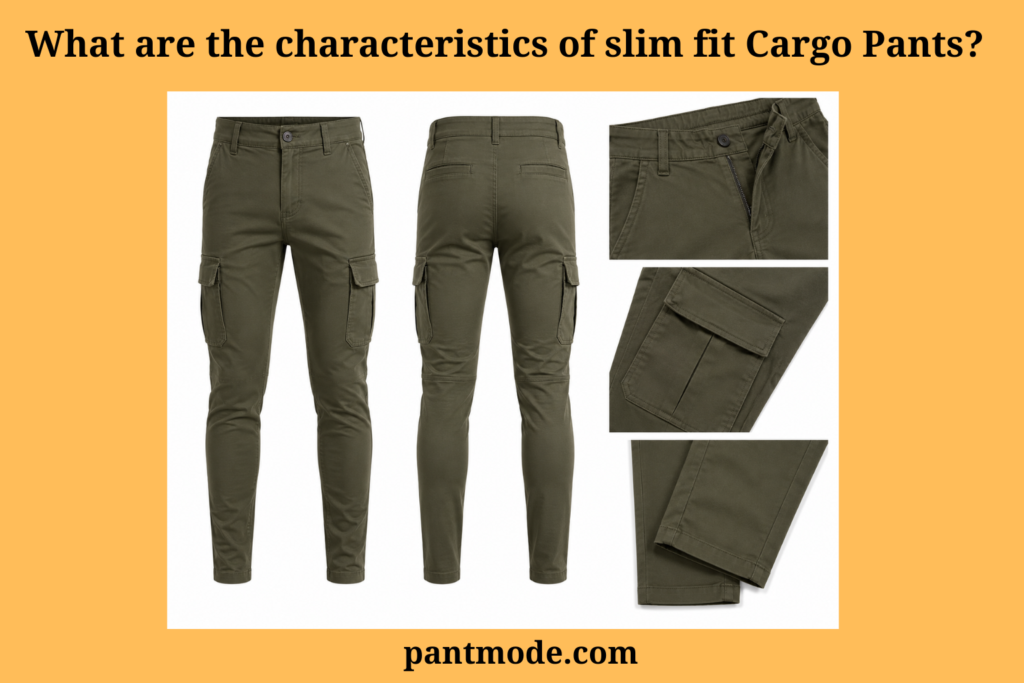
What Are the Characteristics of Slim Fit Cargo Pants? A Complete Style and Fit Guide
Slim fit cargo pants are streamlined utility pants defined by a controlled taper, low-bulk pocket design, clean hems, and enough fabric mobility for everyday movement.
Slim cargos are not the same as skinny cargos or traditional baggy cargos. This guide covers silhouette, pockets, fabric, styling, mistakes, and a final buyer checklist while connecting slim cargo fit to modern cargo style and practical cargo style.
Quick Answer: What Are Slim Fit Cargo Pants?
Slim fit cargo pants are streamlined utility pants with a roomy but controlled upper leg, a gradual taper below the knee, low-bulk cargo pockets, practical fabric stretch, and a clean hem. They differ from traditional baggy cargos because they reduce excess volume, and they differ from skinny cargo pants because they still need thigh room, knee mobility, and pocket proportion.
Definition: Slim Fit Cargo Pants
Slim fit cargo pants are cargo-style utility trousers designed with a slimmer or tapered silhouette, flatter pocket construction, controlled stretch, and cleaner hems. Their goal is to preserve cargo functionality while reducing the bulk associated with traditional wide cargo pants.
Source note: dictionary definitions identify cargo pants by outside leg pockets; slim cargo styling then depends on pocket scale, taper, fabric mobility, and hem behavior. See cargo pants.
Figure: slim cargo pants need thigh room, controlled taper, proportional pockets, fabric stretch, and a clean hem.
What Defines the Core Silhouette of Slim Fit Cargo Pants?
The core silhouette of slim fit cargo pants is defined by a roomy thigh, a controlled taper below the knee, low-bulk pocket scale, and a clean ankle line.
Slim fit cargo pants taper gradually from knee toward ankle. A controlled taper prevents the wide “parachute” effect of traditional cargos while keeping more structure than skinny pants. A clean leg opening should sit close to the shoe without heavy pooling, but exact measurements vary by waist size, inseam, brand, and footwear.
The thigh should allow movement without looking baggy. Cargo pockets add visual weight, so the upper leg needs enough space for sitting, walking, and bending. If the thigh pulls tightly, the cargo pockets will flare, show through, or distort the side line.
The ankle should look clean, not squeezed or stacked. Slim cargos rely on a neat lower-leg line. Too much fabric bunches, while too little room makes them look like skinny jeans.
Pocket scale must match the slimmer silhouette. Large accordion pockets can distort the leg line and make the pants look wider than intended. Slim cargos need flatter pockets, shallow flaps, hidden zips, or small gussets.
Boundary note: slim fit cargo pants should not be treated as skinny jeans. They still need thigh room, seat mobility, and knee movement.
Slim Fit vs. Traditional vs. Skinny Cargo Comparison Table
| Cargo Type | Fit Profile | Pocket Shape | Leg Opening Effect | Best Use | Main Risk |
|---|---|---|---|---|---|
| Traditional baggy cargos | Wide through thigh and leg | Large bellows pockets | Loose and roomy | Workwear, streetwear, utility | Excess bulk |
| Slim fit cargo pants | Roomy thigh with controlled taper | Flat or low-bulk cargo pockets | Clean and modern | Everyday, smart-casual, streetwear | Tight knees if fabric lacks stretch |
| Skinny cargo pants | Tight from thigh to ankle | Small or compressed pockets | Very narrow | Trend styling | Pocket bulges and restricted movement |
| Tapered utility pants | Relaxed thigh, narrower ankle | Minimal utility pockets | Balanced silhouette | Travel, casual workwear | Can look too plain |
| Tailored cargo pants | Straight or slim-straight | Flush or hidden pockets | Polished and clean | Smart-casual outfits | Too formal if pockets disappear |
Which Pocket Designs Keep Slim Cargo Pants Streamlined Instead of Bulky?
Slim cargo trousers stay streamlined when their pockets sit flat, stay proportional to the leg width, use low-bulk closures, and avoid low or oversized placement.
If your thighs are thicker, choose flush, flat, or small gusseted pockets. These pocket styles reduce side projection and help the leg line stay cleaner. Large accordion pockets can make the thigh look wider than the cut intends.
If you want everyday styling, choose mid-thigh pockets that lie flat when empty. Mid-thigh placement keeps storage useful without pulling the eye too low. Low knee or calf pockets disrupt a clean leg line during walking.
If the goal is smart-casual styling, choose hidden snaps, tonal zippers, or shallow flaps. Low-bulk closures make the pants easier to pair with polished casual tops. Loud buttons or bulky flap stacks make the pants look more tactical.
If the goal is travel or commuting, choose low-profile zip pockets or internal compartments. These pockets secure small essentials without changing the outer silhouette. They may look too minimal for classic cargo styling.
If the goal is streetwear impact, slightly larger pockets can work. The wider the pocket, the more the leg needs enough width to support it. Large pockets on a narrow leg create pocket bulges and poor proportion.
Boundary note: practical storage should not distort the slim leg profile. Pocket usefulness needs to match the garment’s silhouette.
Pocket Bulk Control Matrix
| Pocket Design | Bulk Level | Best For | Pass Standard | Avoid If |
|---|---|---|---|---|
| Flat cargo pocket | Low | Smart-casual, everyday wear | Lies flat when empty | You need heavy storage |
| Hidden zip pocket | Low | Travel, commute, minimalist style | Secure without visual bulk | You prefer classic cargo styling |
| Shallow flap pocket | Low-medium | Casual utility | Flap stays flat | Flap sticks outward |
| Small gusseted pocket | Medium | Practical daily carry | Expands only when used | Thigh area already feels tight |
| Large accordion pocket | High | Workwear, bold streetwear | Matches wider leg shape | Slim or skinny leg fit |
| Low knee pocket | Medium-high | Niche utility | Does not disrupt movement | Everyday walking or clean styling |
| Bulky button flap | Medium-high | Rugged casual | Button does not protrude | Smart-casual outfits |
| Internal compartment | Very low | Travel, security | Invisible from outside | Quick access is needed |
How Should You Evaluate Fabric, Stretch, and Mobility in Tapered Cargo Pants?
Tapered cargo pants need fabric that supports movement, pocket structure, shape retention, and comfort without creating knee bagging or visible pocket distortion.
Stretch cotton twill works for everyday and smart-casual slim cargos. It provides mobility with a structured surface. The watch-out is overstretch and knee bagging when the fabric has weak recovery.
Ripstop stretch works for outdoor and streetwear use. It supports pocket structure and abrasion resistance while allowing movement. Stiff non-stretch ripstop can feel restrictive in a slim cut.
Technical nylon blends work for travel and commuting. They support mobility, quick movement, and lightweight wear. Shiny or noisy finishes can look too tactical.
Cotton-polyester blends work for daily durability. They can hold structure and resist easy collapse. Cheap pilling fabric weakens the long-term look.
Stretch canvas works for rugged casual styling. It adds durability while giving the slim silhouette more movement. Fully rigid canvas can feel stiff through the knees and seat.
Refined twill and sateen work for elevated slim cargos. These fabrics pair better with loafers, knitwear, blazers, or clean sneakers. Thin fabric can show pocket outlines, and glossy finishes can look too dressy or cheap.
For broader material behavior, use casual cues. For stretch context, Textile School’s overview of stretch fabric explains why stretch and recovery matter in fitted garments.
Boundary note: slim cuts need mobility support more than loose cargos do, but stretch does not automatically mean better quality.
Fabric and Stretch Decision Matrix
| Fabric Type | Best Use Case | Mobility Level | Structure Level | Best Styling Direction | Avoid |
|---|---|---|---|---|---|
| Stretch cotton twill | Everyday / smart casual | High | Medium-high | Oxford shirt, polo, overshirt | Overstretch and knee bagging |
| Ripstop stretch | Outdoor / streetwear | Medium-high | High | Utility jacket, sneakers, boots | Stiff non-stretch versions |
| Technical nylon blend | Travel / commute | High | Medium | Techwear, shell jackets | Shiny noisy finish |
| Cotton-poly blend | Daily durability | Medium | Medium-high | Casual tees, chore coats | Cheap pilling fabric |
| Stretch canvas | Rugged casual | Medium | High | Boots, heavyweight tees | 100% rigid canvas |
| Refined twill | Elevated casual | Medium | High | Loafers, knitwear, blazer | Thin pocket show-through |
| Sateen cargo fabric | Smart casual | Medium | Medium-high | Minimal tops, clean sneakers | Overly glossy finish |
Figure: slim fit cargo styling depends on top balance, pocket restraint, fabric mood, shoe support, and hem break.
How Can You Style Slim Fit Cargo Pants for Streetwear, Smart-Casual, and Everyday Outfits?
Slim fit cargo pants style best when the top, shoes, pocket volume, and fabric mood support the streamlined utility silhouette.
For smart-casual, use olive twill slim cargos. Pair them with an Oxford shirt, chore coat, loafers, or white sneakers. The expected vibe is refined utility, but bulky pockets weaken the polish. For more elevated casual logic, use polished comfort.
For elevated streetwear, use black ripstop slim cargos. Pair them with an oversized tee, cropped jacket, and chunky sneakers. The expected vibe is modern streetwear, but the cargo should not fit like skinny jeans.
For everyday casual, use khaki cotton-blend slim cargos. Pair them with a tee, overshirt, and low-top trainers. The expected vibe is easy daily wear, but loud pocket hardware can make the outfit look busier than needed.
For travel or commuting, use technical nylon-blend slim cargos. Pair them with a tee, shell jacket, slip-ons, or trail shoes. The expected vibe is functional and clean, but shiny noisy fabric can look too tactical.
For workwear-inspired casual, use brown stretch-canvas slim cargos. Pair them with a heavy tee, flannel, and leather boots. The expected vibe is rugged casual, but avoid a leg that becomes too wide for the slim fit goal.
For night-out minimal styling, use black refined twill slim cargos. Pair them with a knit polo, fitted sweater, or Chelsea boots. The expected vibe is sharp and minimal, but overstuffed pockets break the clean line.
For warm-weather casual, use lightweight stretch-cotton slim cargos. Pair them with a linen shirt, camp shirt, and canvas sneakers. The expected vibe is relaxed and breathable, but heavy rigid canvas can feel uncomfortable in heat.
Boundary note: slim cargos look cleaner when pockets stay flat and footwear supports the hem.
Slim Cargo Outfit Formula Table
| Use Case | Cargo Color / Fabric | Top Formula | Footwear | Expected Vibe | Avoid |
|---|---|---|---|---|---|
| Smart-casual | Olive twill | Oxford shirt + chore coat | Loafers / white sneakers | Refined utility | Bulky pockets |
| Elevated streetwear | Black ripstop | Oversized tee + cropped jacket | Chunky sneakers | Modern streetwear | Skinny cargo fit |
| Everyday casual | Khaki cotton blend | Tee + overshirt | Low-top trainers | Easy daily wear | Loud pocket hardware |
| Travel / commute | Technical nylon blend | Tee + shell jacket | Slip-ons / trail shoes | Functional and clean | Noisy shiny fabric |
| Workwear-inspired | Brown canvas stretch | Heavy tee + flannel | Leather boots | Rugged casual | Overly wide leg |
| Night-out minimal | Black refined twill | Knit polo / fitted sweater | Chelsea boots | Sharp and minimal | Overstuffed pockets |
| Warm-weather casual | Lightweight stretch cotton | Linen shirt / camp shirt | Canvas sneakers | Relaxed and breathable | Heavy rigid canvas |
What Fit and Styling Mistakes Should You Avoid With Slim Cargo Trousers?
The main mistakes to avoid with slim cargo trousers are bulky footwear, overstuffed pockets, oversized pocket scale, poor top balance, rigid fabric, messy hems, loud hardware, and low pocket placement.
Huge boots can swallow the hem. Choose low trainers, Chelsea boots, or sleek sneakers to preserve ankle taper and keep the lower leg clean.
Overstuffed side pockets ruin the drape. Use light carry only so pocket weight does not pull the thigh line outward.
Large pockets on a skinny leg create poor proportion. Use flat pockets on slim legs because pocket scale must match leg width.
Oversized tops can make very slim cargos look top-heavy. Choose structured or cropped tops so the silhouette stays balanced.
Rigid canvas with tight taper restricts movement. Choose stretch twill or ripstop stretch so knees and seat can move naturally.
Heavy stacking makes slim cargos look messy. Use a clean break or slight cuff for a sharper silhouette.
Loud tactical hardware limits versatility. Choose tonal closures if the pants need to work across everyday and polished casual outfits.
Low knee pockets interrupt the leg line. Choose mid-thigh pockets when the goal is a cleaner, longer-looking silhouette.
Boundary note: most slim cargo mistakes come from imbalance between leg width, pocket scale, fabric stiffness, and shoe volume.
Good vs. Bad Styling Checklist
| Styling Area | Bad Choice | Good Choice | Why It Works |
|---|---|---|---|
| Footwear | Huge boots swallowing hem | Low trainers, Chelsea boots, sleek sneakers | Preserves ankle taper |
| Pocket use | Overstuffed side pockets | Light carry only | Maintains drape |
| Pocket scale | Large pockets on skinny leg | Flat pockets on slim leg | Better proportion |
| Top balance | Oversized top + very slim cargos | Structured or cropped top | Reduces top-heavy look |
| Fabric | Rigid canvas with tight taper | Stretch twill or ripstop stretch | Better mobility |
| Hem | Heavy stacking | Clean break or slight cuff | Sharper silhouette |
| Hardware | Loud tactical details | Tonal closures | More versatile |
| Pocket placement | Low knee pockets | Mid-thigh pockets | Cleaner leg line |
How Do You Choose the Perfect Pair of Slim Fit Cargo Pants Before Buying?
You choose the perfect pair of slim fit cargo pants by checking taper, thigh room, fabric stretch, pocket bulk, pocket placement, hem break, shoe compatibility, top-half balance, fabric weight, and long-term versatility.
Taper below the knee: ask whether the leg tapers cleanly without clinging. The pass standard is a slim line that still allows knee movement.
Thigh and seat room: ask whether sitting and walking feel natural. The pass standard is enough room without baggy excess.
Fabric stretch: ask whether the fabric includes enough mobility for a slim cut. The pass standard is stretch with recovery, not stretch that bags out.
Pocket bulk: ask whether the pockets lie flat when empty. The pass standard is storage that does not widen the thigh line.
Pocket placement: ask whether pockets sit at a balanced mid-thigh height. The pass standard is useful access without low-leg disruption.
Hem break: ask whether the hem sits cleanly over your preferred shoes. The pass standard is a clean break, slight cuff, or intentional ankle line.
Shoe compatibility: ask whether the pants work with your main footwear options. The pass standard is no shoe swallowed by fabric and no hem floating awkwardly.
Top-half balance: ask whether the pants can pair with relaxed and structured tops. The pass standard is at least three outfit combinations before buying.
Fabric weight: ask whether the fabric matches your climate and lifestyle. The pass standard is enough structure without unnecessary heat or stiffness.
Long-term versatility: ask whether the hardware, color, pockets, and silhouette will still feel useful beyond one outfit idea. The pass standard is edited utility, not one-trend decoration.
For nearby daily-wear options, compare non-denim and the wider casual pants cluster.
Boundary note: the ideal pair must work with real shoes, real tops, and real movement, not only product photos.
Final Slim Fit Cargo Buyer’s Checklist
| Buyer Check | Yes / No |
|---|---|
| Does the leg taper cleanly below the knee without clinging? | |
| Is there enough thigh and seat room for sitting and walking? | |
| Does the fabric include enough stretch or mobility for a slim cut? | |
| Do the cargo pockets lie flat when empty? | |
| Are the pockets placed at a balanced mid-thigh height? | |
| Does the hem sit cleanly over your preferred shoes? | |
| Do the pants work with your main footwear options? | |
| Can the pants pair with both relaxed and structured tops? | |
| Does the fabric weight match your climate and lifestyle? | |
| Are closures, snaps, zippers, and hardware minimal enough for your style goal? | |
| Do the pants avoid looking too tactical, too skinny, or too bulky? | |
| Can you build at least three outfits with them before buying? |
Key Takeaway
The best slim fit cargo pants balance taper, mobility, pocket scale, fabric stretch, and shoe compatibility. Avoid pairs that are too skinny through the thigh, have oversized pockets on narrow legs, use stiff fabric without stretch, or stack heavily over the shoe.
Frequently Asked Questions
Slim fit cargo pants are streamlined utility pants with a roomy but controlled upper leg, a gradual taper below the knee, low-bulk cargo pockets, practical fabric stretch, and a clean hem.
Slim fit cargo pants should have enough thigh and seat room for movement, a controlled taper below the knee, flat pockets that do not bulge, and a clean hem that works with the intended shoes.
Slim fit cargo pants are not the same as skinny cargo pants. Slim cargos need thigh room, knee mobility, pocket proportion, and clean hems, while skinny cargos are much tighter from thigh to ankle.
Flat cargo pockets, hidden zip pockets, shallow flap pockets, small gusseted pockets, and internal compartments work best on slim cargo pants because they control bulk and preserve the leg line.
Check taper, thigh room, fabric stretch, pocket bulk, pocket placement, hem break, shoe compatibility, top-half balance, fabric weight, hardware visibility, and outfit versatility.
Conclusion
Slim fit cargo pants work best when the taper, thigh room, pocket scale, fabric stretch, hem break, and styling balance support the same streamlined utility look.
Slim cargos are not baggy cargos and not skinny jeans; they need a controlled taper with real mobility.
Pocket design must stay proportional to the slimmer silhouette.
Fabric stretch, hem break, and footwear compatibility determine whether the pants look clean or awkward.
Choose slim fit cargo pants by testing movement, pocket flatness, shoe compatibility, and three real outfit combinations before buying.