
Are All Jeans Pant Types Made From Denim Fabric?
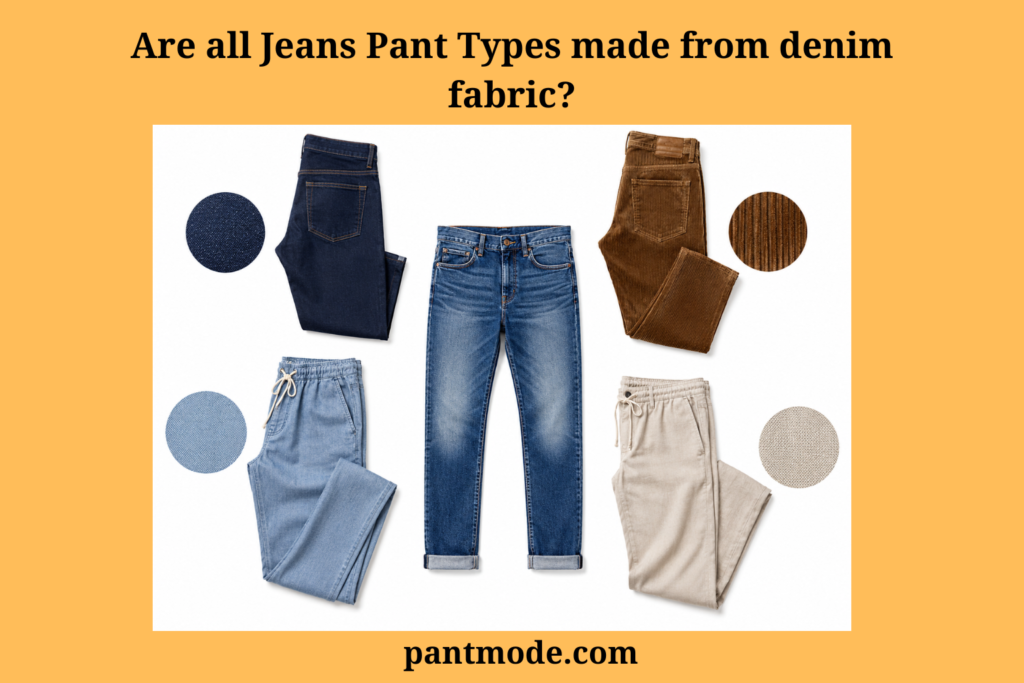
Not all Jeans Pant Types are made from denim fabric; denim is the traditional textile for jeans, but modern jeans can use stretch blends, chambray-style cotton, corduroy, linen blends, lyocell blends, and other materials when the garment still follows jeans-style construction.
Jeans and denim are related but not identical. Their fabric story is separate from word origin, and this guide explains garment-versus-textile definitions, modern fabric options, fabric identification steps, and care mistakes that can damage different Jeans Pant Fabric choices.
Quick Answer: Are All Jeans Pant Types Made From Denim Fabric?
No, not all Jeans Pant Types are made from denim fabric. Traditional jeans are usually made from denim, but modern jeans can also use stretch denim blends, chambray-style cotton, corduroy, lightweight twills, linen blends, lyocell blends, and other materials when the garment still follows jeans-style construction.
Definition: Jeans Pant Fabric vs. Denim Textile
Jeans Pant Fabric refers to the material used to construct jeans-style pants. Denim textile is a specific cotton twill fabric traditionally used for jeans. Jeans describe the garment category, while denim describes one common fabric used to make that garment.
Figure: jeans fabric decisions separate garment identity, textile type, fabric performance, and care-label evidence.
What Defines Jeans Pant Fabric Compared With Denim Textile?
Jeans Pant Fabric describes the material used to construct jeans-style pants, while denim textile describes one specific twill-weave fabric traditionally used to make jeans.
The rule is that jeans describe a garment style or construction category. Denim describes a textile, usually a sturdy cotton twill, that has historically been used to make many traditional jeans.
The reason is that garment identity and textile identity are not the same thing. A jeans-style pant can be recognized through five-pocket layout, rivets, reinforced seams, silhouette, and workwear-derived structure.
Fabric identity still affects appearance, fading, softness, and structure. PantMode explains that visual layer separately in fabric and wash.
Boundary note: Traditional jeans are usually denim, but jeans-style construction can appear in alternative fabrics. A five-pocket layout alone should still be evaluated with silhouette, use, and construction.
Jeans Garment vs. Denim Textile Comparison Table
| Concept | What It Describes | How It Works in Jeans Pant Types |
|---|---|---|
| Jeans | A garment style or pant category | Recognized through construction, silhouette, pockets, rivets, and workwear heritage |
| Denim | A specific textile | Traditionally used to make jeans through durable twill-weave cotton fabric |
| Jeans Pant Fabric | The material used in jeans-style pants | Can include denim, stretch blends, corduroy, chambray-style cotton, linen blends, or other fabrics |
| Jeans Construction | The garment structure | Often includes five-pocket layout, rivets, reinforced seams, and a jeans-like silhouette |
Why Do Modern Jeans Fabrics Include Materials Beyond Rigid Cotton Denim?
Modern jeans fabrics include materials beyond rigid cotton denim because different wearers need more mobility, breathability, warmth, softness, and easier care than traditional denim always provides.
Rigid 100% cotton denim provides structure and durability, but it can feel stiff, require break-in time, restrict mobility, and retain heat. Stretch denim solves part of that problem by adding mobility through elastane or similar fibers.
Lightweight twills, chambray-style cotton, and linen blends support warmer climates because they feel airier and easier to wear in heat. Corduroy, flannel-lined jeans, and heavier cotton fabrics support colder conditions by adding warmth and seasonal density.
Traditional workwear context explains why denim became closely associated with jeans in the first place. PantMode covers that history inside blue jeans inventor.
Soft-washed denim and cotton-lyocell blends support comfort from the first wear because they reduce stiffness. The tradeoff is that softer blends may feel less traditional than rigid denim and may need different care.
Boundary note: Alternative jeans fabrics can improve comfort or climate performance, but they may change durability, structure, care requirements, or traditional denim feel.
Modern Jeans Fabric Evolution Table
| Wear Problem | Fabric Solution | Result | Tradeoff / Boundary |
|---|---|---|---|
| Rigid denim can limit movement | Stretch denim with elastane | Better mobility and sitting comfort | Too much stretch may reduce structure |
| Heavy denim can feel hot | Lightweight twill, chambray-style cotton, or linen blend | Cooler warm-weather wear | Less rugged than heavyweight denim |
| Standard denim may lack warmth | Corduroy, flannel lining, or heavier cotton | Better cold-weather insulation | May require gentler care |
| New denim can feel stiff | Soft-washed denim or cotton-lyocell blends | Faster comfort from first wear | Softer hand may reduce traditional stiffness |
Which Alternative Jeans Fabric Should You Choose for Climate, Comfort, and Lifestyle?
The best alternative jeans fabric depends on climate, mobility needs, durability expectations, softness preference, and how much care the wearer is willing to manage.
Mobility-focused fabric choices should also be checked against long-wear comfort so stretch, recovery, waistband pressure, and seated movement work together.
If you need summer breathability, choose lightweight cotton twill, chambray-style fabric, or a linen blend. The result is cooler wear with jeans-style construction, but the fabric may wrinkle or feel less structured.
If you need high mobility, choose a stretch denim blend with moderate elastane. The result is easier sitting, walking, and daily movement, but excess stretch may reduce recovery and shape retention.
If you need cold-weather warmth, choose corduroy, flannel-lined jeans, or heavier denim. The result is better insulation, but these fabrics may feel bulky or require more careful washing.
If you need durability, choose rigid cotton denim or heavyweight denim. The result is stronger structure and longer break-in performance, but the fabric can feel stiff at first.
Climate and Lifestyle Fabric Decision Matrix
| Reader Need | Choose This Fabric | Result | Boundary / Tradeoff |
|---|---|---|---|
| Summer breathability | Lightweight cotton twill, chambray-style fabric, or linen blend | Cooler wear with jeans-style construction | May wrinkle or feel less structured |
| High mobility | Stretch denim blend with moderate elastane | Easier sitting, walking, and daily movement | Excess stretch may reduce recovery |
| Cold-weather warmth | Corduroy, flannel-lined jeans, or heavier denim | Better insulation and seasonal comfort | May feel bulky or need careful washing |
| Durability | Rigid cotton denim or heavyweight denim | Stronger structure and longer break-in performance | Can feel stiff at first |
| Softness | Cotton-lyocell blend or soft-washed denim | Faster comfort from first wear | May feel less traditional than rigid denim |
How Can You Identify the True Fabric Composition of Jeans?
You can identify the true fabric composition of jeans by checking the care label, inspecting the weave, feeling the texture, testing stretch recovery, and comparing fabric weight.
The care label is the strongest first evidence because it lists fiber content. That label can confirm whether the garment is cotton denim, stretch denim, corduroy, linen blend, lyocell blend, or another material.
Weave and texture provide the next layer of evidence. Diagonal twill lines often indicate denim or twill construction, while raised ribs indicate corduroy and lighter flat texture may suggest chambray-style fabric.
Stretch recovery reveals elastane or similar fibers. A stretch fabric should pull slightly and return to shape without remaining loose.
After the fabric is identified, the garment can be placed inside broader core types by construction, silhouette, and use.
Boundary note: Feel alone is not enough. Label evidence, weave structure, texture, stretch recovery, and fabric weight should work together before you assume the fabric type.
Figure: care label, weave, texture, stretch recovery, and weight create a practical jeans fabric verification path.
5-Step Jeans Fabric Identification Checklist
☐ Check the care label: Fiber content confirms whether the jeans are cotton denim, stretch denim, corduroy, linen blend, lyocell blend, or another material.
☐ Inspect the weave: Diagonal twill lines usually indicate denim or twill-based construction.
☐ Feel the texture: Corduroy has raised ribs, denim feels denser, and chambray-style fabric feels lighter and flatter.
☐ Test stretch recovery: Stretch denim should pull slightly and return to shape without remaining loose.
☐ Compare fabric weight: Heavy denim feels substantial, while lightweight alternatives feel airier and easier to drape.
What Care Mistakes Damage Non-Denim Jeans Materials and Stretch Denim Blends?
Care mistakes damage non-denim jeans materials and stretch denim blends when washing, drying, heat, agitation, or raw-denim methods are applied to the wrong fabric.
Hot water and high dryer heat can weaken elastic fibers in stretch denim and reduce shape recovery. Cold washing and air drying are safer when the care label allows them.
Corduroy jeans need gentler treatment than rigid denim because raised ribs can flatten, crush, or wear unevenly under harsh agitation. Chambray-style and lightweight fabrics may need regular gentle washing rather than raw-denim delay methods.
Boundary note: Jeans-style construction does not guarantee denim-style care requirements. The care label overrides appearance.
Alternative Jeans Fabric Care Table
| Mistake | Correction | Reason |
|---|---|---|
| Washing stretch denim in hot water or drying it on high heat | Wash cold and air dry when possible | High heat can weaken elastic fibers and reduce shape recovery |
| Treating corduroy jeans like raw denim | Follow the care label and avoid harsh agitation | Corduroy ribs can flatten, crush, or wear unevenly |
| Using raw denim care methods on lightweight jeans fabrics | Wash lightweight fabrics gently when soiled | Oils, sweat, and dirt can damage softer or lighter fabrics |
| Ignoring the care label because the garment “looks like jeans” | Follow fiber content and garment instructions | Jeans-style construction does not guarantee denim-style care |
What Checklist Should You Use Before Buying Jeans Pant Fabric?
Before buying Jeans Pant Fabric, check the material, weave, weight, stretch recovery, climate suitability, care requirements, and whether the garment still supports jeans-style construction.
The label and weave should confirm fabric identity before you assume a garment is denim. Climate, movement, durability, softness, and care needs should guide the final fabric decision.
Final Jeans Fabric Buying Checklist
☐ Check whether the garment is true denim or another fabric: Read the label and inspect the weave before assuming the jeans are denim.
☐ Check whether the fabric matches your climate: Choose lightweight blends for heat and heavier fabrics or corduroy for cold weather.
☐ Check whether the fabric supports your movement needs: Choose stretch blends for mobility and rigid denim for structure.
☐ Check whether the fabric requires special care: Avoid fabrics you cannot wash, dry, or maintain correctly.
☐ Check whether the material supports jeans-style construction: Look for five-pocket structure, rivets, reinforced seams, and a jeans-like silhouette.
Key Takeaway
Jeans and denim are related but not identical. Denim is the traditional fabric, while Jeans Pant Types are defined by garment construction, silhouette, and use. The best jeans fabric depends on climate, mobility needs, durability expectations, comfort preference, and care requirements.
Frequently Asked Questions
No. Traditional jeans are usually made from denim, but modern Jeans Pant Types can also use stretch denim blends, chambray-style cotton, corduroy, lightweight twills, linen blends, lyocell blends, and other materials when the garment follows jeans-style construction.
Jeans describe a garment category or construction style, while denim describes a specific cotton twill textile traditionally used to make jeans.
Check the care label, inspect the weave, feel the texture, test stretch recovery, and compare fabric weight before assuming the jeans are denim.
A non-denim pant can follow jeans-style construction when it uses features such as five-pocket layout, rivets, reinforced seams, and a jeans-like silhouette.
Conclusion
Jeans Pant Types are traditionally associated with denim fabric, but modern jeans can use many materials when the garment preserves jeans-style construction and meets the wearer’s comfort, climate, durability, and care needs.
Jeans describe a garment category, while denim describes a textile. Denim remains the traditional jeans fabric, but it is not the only possible Jeans Pant Fabric in modern clothing.
Stretch blends, chambray-style cotton, corduroy, linen blends, and soft blends solve different wearer needs. The best Jeans Pant Fabric is the one that matches climate, movement, durability, and maintenance expectations.